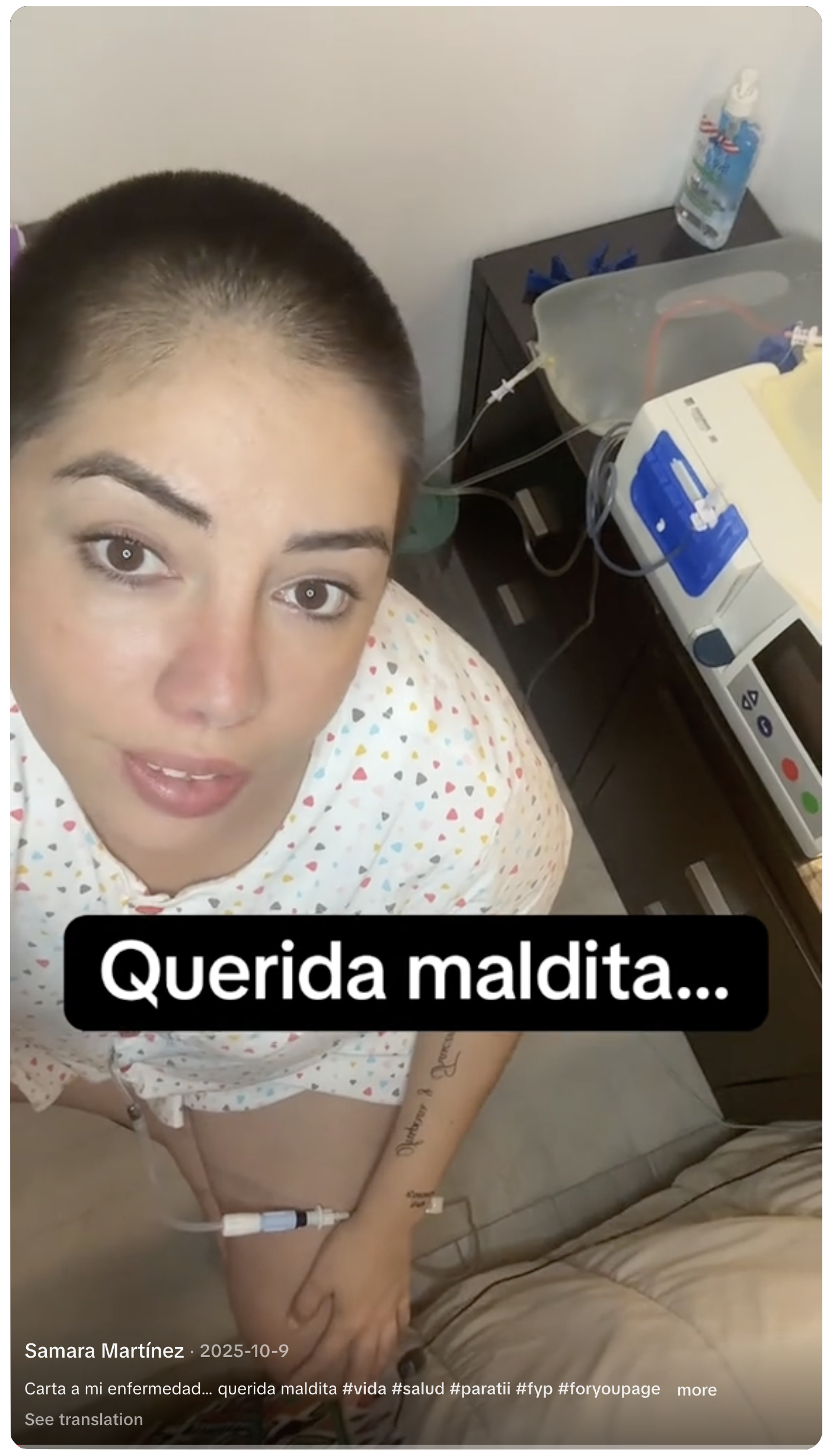
Samara Martínez, screenshot from ‘Carta a mi enfermedad’ video, 2025 (courtesy of the author)
On 9 October 2025, 30-year-old Mexican journalist Samara Martínez posted a TikTok video-performance of her epistolary poem ‘Querida maldita…’ (‘Dear damned one’ in English, though this translation misses the female-gendering of the original ‘maldita’, referring to ‘enfermedad’, the Spanish for ‘illness’). In her early twenties, Martínez was diagnosed with focal segmental glomerulosclerosis, a disease that causes irreversible scarring in the kidneys and can only be treated with dialysis or transplant. A few months later, Martínez found out she also had systemic lupus erythematosus, an autoimmune disease that accelerated her kidneys’ deterioration. Thus, the ‘Querida maldita’ letter addresses a combination of progressive, incurable conditions – and became part of Martínez’s campaign to legalize assisted dying in Mexico. According to Martínez, the poem is just one in a series of letters she wrote to her illness. Martínez introduces the video by asking ‘How can you love and hate something so intensely at the same time?’ and explaining that such a question occupies her every thought. Before reciting the poem, she adds, ‘This is one of the most personal pieces I want to share with you’ (translated from the Spanish, as all other quotes, unless mentioned otherwise). The 809-word text opens by acknowledging the dear-damned paradox as ‘a strange feeling that persists’. The third line encapsulates the letter’s main argument: ‘You have given me so much, but you have also taken so much away’. The speaker recognizes her illness as ‘the best teacher in the world’ and proceeds to present the dual nature of this ‘Maestra’: on one hand, ‘harsh, demanding, authoritarian’; on the other, bearing ‘a profound sense of humanity’, from which ‘one learns to listen, be empathetic’. The paradox reappears as a surprisingly well-balanced equation: ‘as time goes on, you take more from me, yet you also give me more’. While appreciating such an equilibrium, the speaker still questions its fairness: ‘How did you decide that I was the one meant to host you… for over ten years’, since in others ‘you simply arrive and then move on’? The letter closes with a reiteration of the importance and duality of the dear-damned: ‘Without you, I wouldn’t be the same person. My dear, damned illness – I love you and I hate you so much’.
The video’s portrait framing, mirroring the shape of an upright phone screen on which it is meant to be watched, has become a TikTok hallmark (see related entry on Valentina Maureira’s video-plea that sparked debate in Chile). As the ‘Querida maldita’ self-recording begins, Martínez looks up at the camera while sitting near a cabinet whose top holds a dialysis machine, blue medical clips, and a bottle of hand-sanitizer. The machine is connected to a sterile-solution bag and various tubes, including one that enters Martínez’s abdomen. She is wearing pyjama shorts and a shirt, both patterned with small, colourful hearts. Her practical buzzcut and distinctive arm tattoos are prominent. As the recitation begins, the camera angle changes to eye level and we see Martínez reading from a purple phone she steadies with one hand while gesticulating with the other. The video-poem, with a runtime of 2 minutes 20 seconds, is but one of 100+ short videos Martínez has shared through social media, gathering more than 400,000 followers and 6.5 million likes in her campaign to ‘be the person who legalises euthanasia in Mexico’ (originally in English, as reported by The Straits Times). Other posts reveal Martínez’s routine of preparing to connect herself to and disconnect from the dialysis machine, which filters her blood for 10 hours every night. The videos’ cumulative effect is a mix of insight into a person’s vulnerability and positive attitude – a balance that challenges preconceived notions of when suffering should be kept private or made public. Beyond her social-media presence, Martínez has spoken at rallies, organized a subway exhibit, and given numerous interviews explaining her condition and advocating for self-determination. Talking to MVS Noticias, she addresses a frequent question, ‘How can you want to die if you look so well?’, by clarifying that she is ‘not well inside’ and pointing to ‘the stereotype of what a person with these illnesses should look like’ (see related entries on Montaner’s memoir and Sepúlveda’s interview, which discuss this expected performance of suffering). In the same interview, Martínez expresses that ‘she focuses on the good because she only has energy for the good’. Her positive attitude and candid videos therefore underscore her passion for life, ground her activism in her daily routine, and present her fight for assisted dying not as giving up, but as a way to claim agency.
One of Martínez’s viral videos, published on 28 August 2025, introduced the hashtag ‘LeyTrasciende’ (Transcend Law) and asked viewers, ‘Help me legalize euthanasia in Mexico’. Martínez presented Ley Trasciende as a citizens’ initiative to create a legal ‘option for individuals who decide not to continue with a treatment or a replacement therapy, or for those for whom the pain simply outweighs the joy of daily living’. She emphasizes that ‘it is not an imposition; it is a choice rooted entirely in free thought and personal autonomy’. This seems to address assumptions regarding freedom and autonomy in the assisted-dying debate, as well as fears of vulnerability, gesturing towards the complexity of implementing change at a societal level. Complementing that video, she started a petition with Change.org which has more than 192,000 signatures to date. Martínez’s media presence has turned her into the face of the assisted-dying movement in Mexico, personalizing ethical ideas that might otherwise remain abstract. The strategy to ground legislative change in personal stories seems intentional and particularly pronounced in Mexico – and in Latin America in general, as opposed to Europe, where strict privacy norms and civil-law conventions prioritize anonymity and neutrality. In an interview with El País, Martínez reflects on the paradoxical Mexican context, where the Day of the Dead is an obvious cultural commemoration of death but assisted dying remains illegal: ‘In Mexico, we celebrate death, yet we do not talk about it’. Martínez has been compared to other Latin-American activists who expertly employed social media to share their stories as arguments for assisted dying: an article from El País republished by DMD México links Martínez to Paola Roldán, who successfully challenged the unconstitutionality of assisted dying in Ecuador; another, in Nexos, compares Martínez to Ana Estrada, who secured an exemption from the criminal code in Peru to die by euthanasia (see related entries). Mexico’s Penal Code criminalizes assisted dying (Articles 312-313) and a 2009 addendum to the General Health Act (Art 166 Bis 21) prohibits assisted dying in the context of palliative care. First enacted in Mexico City in 2008 and reformed in 2012, a ‘Ley de Voluntad Anticipada’ (Advance-Request Law) has been approved in over 20 states, allowing patients to refuse life support. However, Martínez believes that an advance request is not enough to secure her dignity, as it could take her 2 excruciating weeks to die if her dialysis were discontinued. In October 2025, versions of the Ley Trasciende initiative were introduced to both chambers of the Mexican Congress and have been gathering public support ever since.
Samara Martínez (@sam.amm), ‘Carta a mi enfermedad: Reflexiones de vida’, TikTok
Change.org, ‘LeyTrasciende’ [Petition Video], Facebook
Samara Martínez Montaño, ‘Jodidamente viva: Cartas desde un cuerpo enfermo y un alma que trasciende’, Océano, 2026, ISBN: 9786075842868.
‘Resilient young woman leads fight for euthanasia in Mexico’, The Straits Times (Singapore), 2025

Valentina Maureira
In 2015, 14-year-old Valentina Maureira self-recorded a video pleading with Chile’s president to authorize her euthanasia, because she was tired of living with cystic fibrosis. The video went viral, drawing a presidential visit, igniting right-to-die debates, and shaping legislative proposals. Yet, the legislative effort stalled, and Chile’s penal code still criminalizes assisted dying.
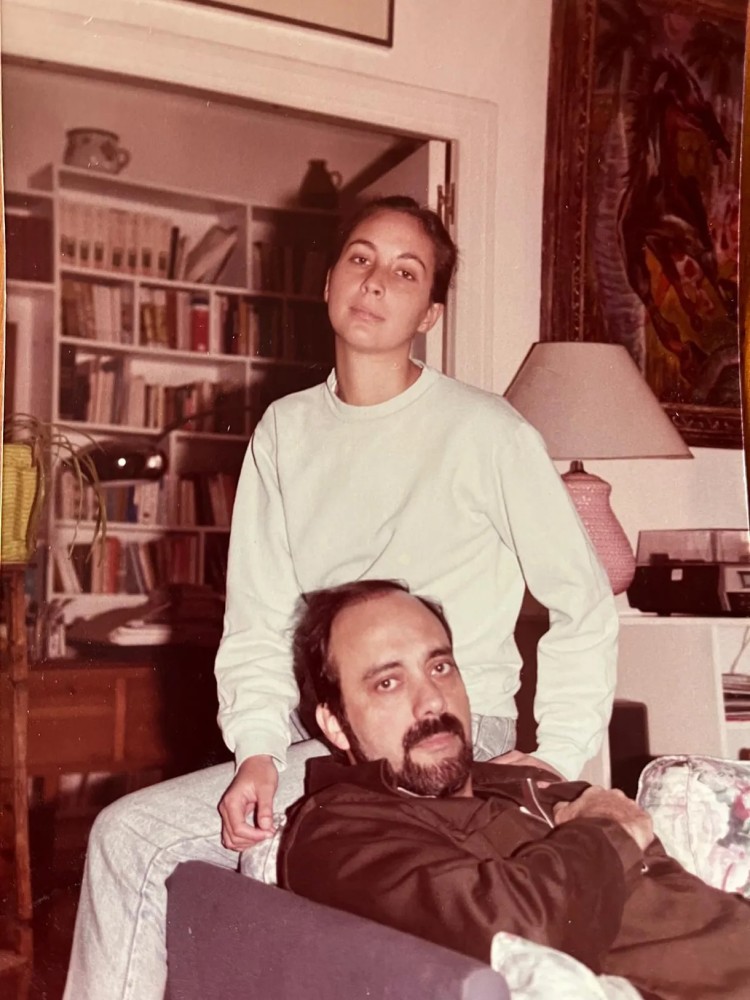
Gina Montaner
About to turn 79 and suffering from what seemed to be Parkinson’s, the Cuban-Spanish writer Carlos Alberto Montaner asked his daughter to help him seek an assisted death. In this memoir, Gina Montaner recounts how her father, as a political exile, fought for democratization in Cuba and, as a naturalized citizen, for the right to access legal euthanasia in Spain.
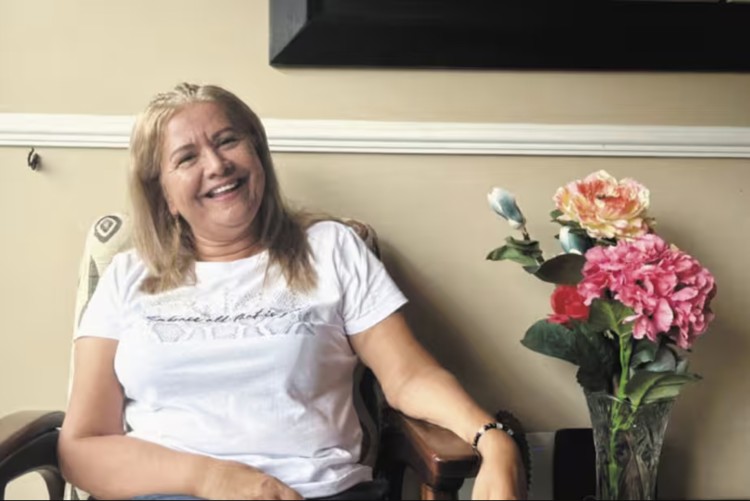
Martha Sepúlveda (interviewee), Juan David Laverde (interviewer)
In October 2021, Noticias Caracol aired an interview with Martha Sepúlveda, who expected to become the first non-terminal patient to have a legal euthanasia in Colombia. The interview went viral; Sepúlveda’s unworried attitude – smiling and seeing no conflict between her decision and her Catholic faith – caused controversy, and her euthanasia was cancelled before being reauthorized for 2022.
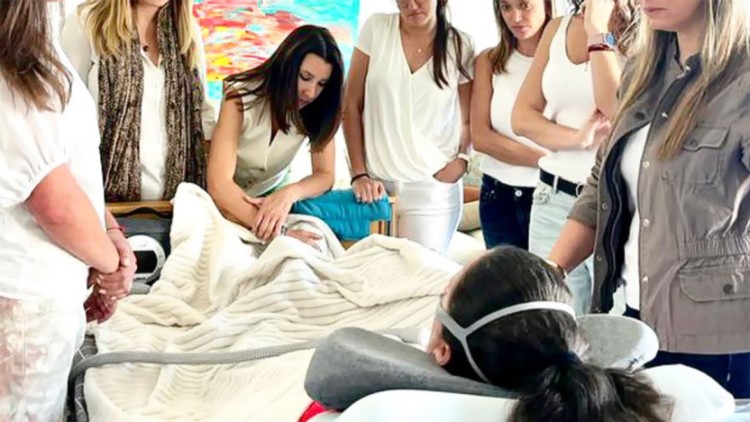
Paola Roldán
Published two years before her constitutional victory for the right to die, Paola Roldán’s memoir narrates her journey of self-discovery and of living with ALS, a chronic disease that left her paralyzed and dependent on a respirator. Dedicated to her son and having a spiritual dimension, the 2022 book helped promote Roldán’s plea for self-determination in Ecuador’s religious-political landscape.
Ana Estrada
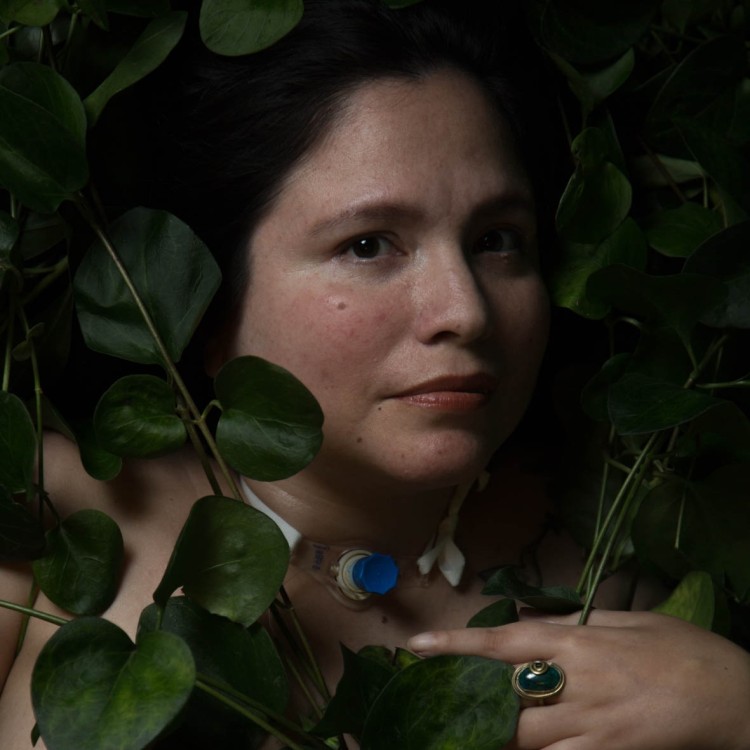
From 2019 to 2024, the personal blog of the psychologist Ana Estrada, typed with the one finger she could move, became a focal point of the debate on assisted dying in Peru. A chronicle of Estrada’s life with polymyositis and in palliative care, the blog supported her successful appeal for the right to die, creating a legal precedent in her country and sparking discussion far beyond.