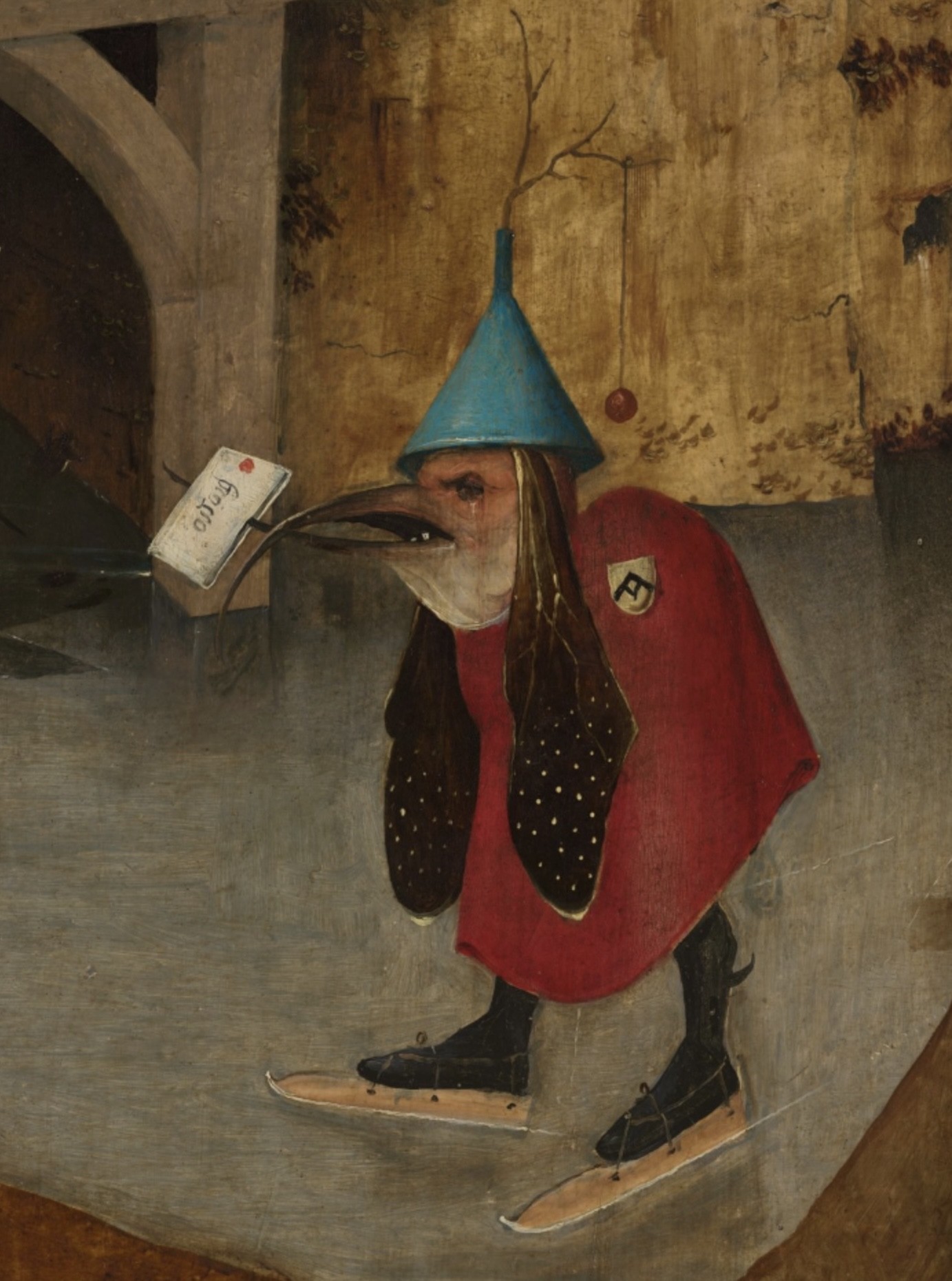
Hieronymus Bosch, detail from ‘The Temptation of St Anthony’, c. 1500–10
First published in 1996, Cartas desde el infierno (Letters from hell) is a collection of letters, poems, and essays by Galician sailor and writer Ramón Sampedro Cameán, commonly known as Ramón Sampedro. In 1968, the 25-year-old Sampedro became paralyzed from the neck down after misjudging the water’s depth when diving into the sea from rocks at the northern Spanish beach of As Furnas. As he recounts in the opening of the book, his head struck the seabed and he sustained a fracture of the seventh cervical vertebra. By holding a pen between his teeth, he wrote over the following decades what would become a landmark treatise on the ethics of euthanasia. In the volume, Sampedro frames life as a balancing act between the pursuit of pleasure and the fear of death; believing he can no longer pursue pleasure, and considering his survival to be artificial and involuntary, he wishes to die. However, he is unable to do so without assistance. He then reasons that, since suicide is not a crime, anyone who assists in his death should be exempt from legal consequences. Sampedro presents euthanasia as a rational act and equates being forced to survive against his will with irrationality. In a passage titled ‘The right to be born and the right to die’, he argues that a child conceived against a person’s will, just like an imposed death, is a crime; but – he continues – a death desired by someone who wants freedom from untreatable pain, just like a child conceived out of love, would be a good thing. The book is divided into three sections, all equally assertive in their defence of the right to die, though with very different tones: the grace in the letters to potential friends (part 1) gives way to a drier assertiveness in condensed arguments and reactions to the press (part 2), and, finally, to exasperation in missives to people in positions of power, including the King of Spain, the Pope, and the Minister of Justice (part 3). After the release and public acclaim of Alejandro Amenábar’s 2004 film Mar adentro, based on Sampedro’s life, the book received a second edition, in 2005; containing a preface by Amenábar and the final letter Sampedro left to his family, the new edition quickly sold hundreds of thousands of copies and was translated into Catalan, Portuguese, and Italian. The dialogue in the film is inspired by various letters reproduced in the book. However, the film has a clear narrative arc, whereas the book is a hybrid memoir without a linear storyline – a collection of epistolary and poetic writing, mostly interested in conveying philosophical arguments and lyrical renderings of Sampedro’s condition.
Cartas desde el infierno was published in the middle of Sampedro’s legal saga. When the first edition was launched in 1996, Sampedro’s appeal for legal euthanasia (the first such appeal in Spain) had already been dismissed by the Constitutional Court in 1994 (on the grounds of unsuitable filing jurisdiction) and by the European Commission of Human Rights in 1995 (on the grounds of unexhausted legal paths in Spain). In the year of the book’s publication, Sampedro was denied the right to speak in a new court hearing — and he included a letter to the judges responsible for his case in the volume. When Sampedro had an extrajudicial assisted suicide in 1998, his pending appeal with the Constitutional Court was dismissed, and his sister-in-law was not allowed to represent him posthumously; in 2004, the UN Human Rights Committee turned down a similar request by Sampedro’s legal heir. Even if Sampedro’s court battles were never successful, his case is often cited as a major influence leading to the 2021 decriminalization and regulation of assisted dying in Spain. In 2023, in a sentence upholding the right-to-die, the Constitutional Court mentioned Sampedro’s pioneering appeals. The story of Sampedro’s pleas is entwined with the growth of the Derecho a Morir Dignamente (DMD) foundation, whose lawyers represented Sampedro on various occasions. Yet, other interest groups have vehemently disagreed with Sampedro’s positions, among them several organisms associated with the Catholic Church. Moreover, the humanist and inventor Javier Romañach Cabrero, writing for the Foro de Vida Independiente y Divertad (a movement for independent living), has pointed out the ableism of some of Sampedro’s arguments, which dismissed other dignified paths besides death for people suffering from quadriplegia. Romañach Cabrero, who recovered partial movement of the upper limbs after a fracture of a cervical vertebra, criticized Sampedro’s generalizations while respecting his individual decision to end his life. Advocates of assisted dying frequently mention Sampedro’s work: the Portuguese novelist and Nobel-prize laureate José Saramago, for instance, recalls Sampedro when discussing the ethics of euthanasia as portrayed in his novel As intermitências da morte; the psychologist Ana Estrada underscores the importance of Sampedro and of the journalist Laura Palmés (who interviewed and corresponded with Sampedro) as inspirations for her own constitutional battles in Peru.
[Italian Translation] Ramón Sampedro, ‘Mare dentro : lettere dall’inferno’, tr. G. Garbellini, Mondadori, 2006
Ramón Sampedro, ‘Carta de Ramón Sampedro a Los Jueces (1996-11-13)’, Derecho a Morir Dignamente, 8 January 1997

Alejandro Amenábar (director and writer), Mateo Gil (writer)
For almost thirty years, Ramón Sampedro has been paralysed from the neck down. Having had enough of his paraplegic state, Ramón decides that he wants to die and seeks the help of an assisted dying lobby group to generate support for his case. When all legal avenues fail, a small group of his friends help Ramón to end his life.
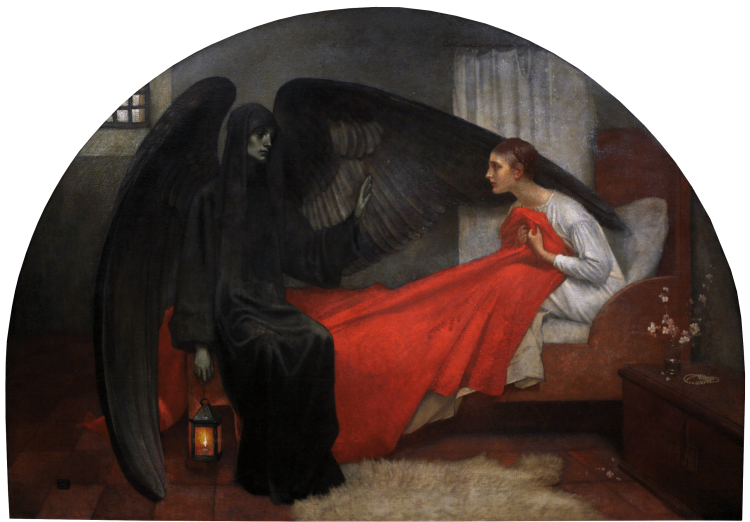
José Saramago
‘As intermitências da morte’ by Portuguese writer José Saramago explores the economic, political, religious, and ethical questions that would be raised if, suddenly, people stopped dying. Distinguishing between ‘to kill’ and ‘to give death’, this allegorical novel was invoked in the debate on the legalization of assisted dying in Portugal and of orthothanasia in Brazil.

Ana Estrada
From 2019 to 2024, the personal blog of the psychologist Ana Estrada, typed with the one finger she could move, became a focal point of the debate on assisted dying in Peru. A chronicle of Estrada’s life with polymyositis and in palliative care, the blog supported her successful appeal for the right to die, creating a legal precedent in her country and sparking discussion far beyond.
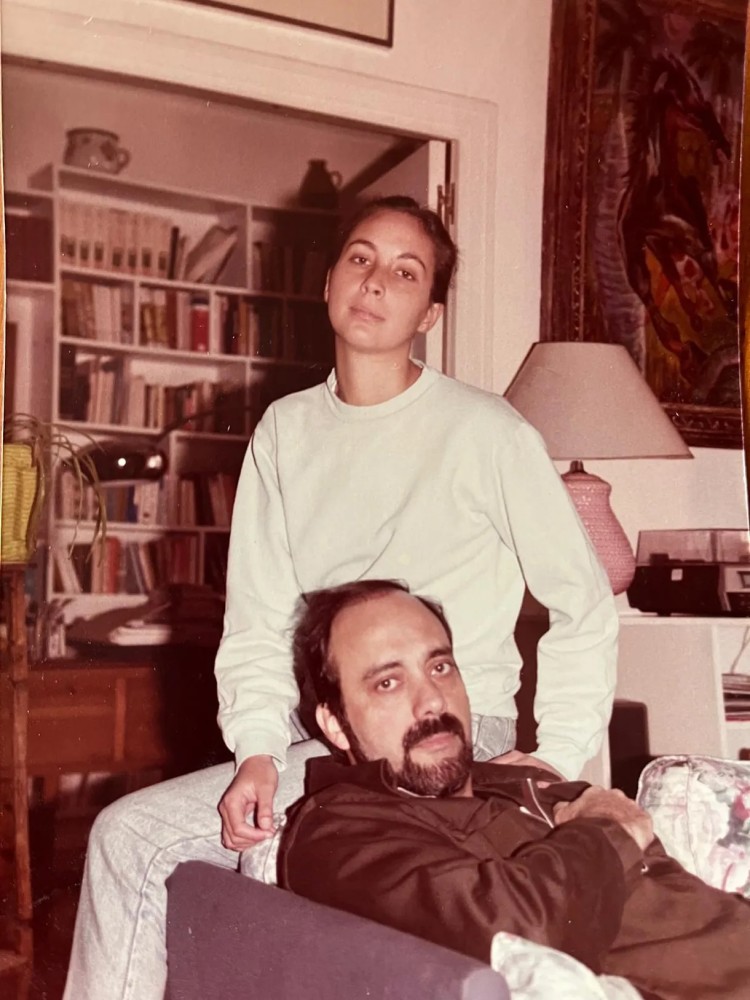
Gina Montaner
About to turn 79 and suffering from what seemed to be Parkinson’s, the Cuban-Spanish writer Carlos Alberto Montaner asked his daughter to help him seek an assisted death. In this memoir, Gina Montaner recounts how her father, as a political exile, fought for democratization in Cuba and, as a naturalized citizen, for the right to access legal euthanasia in Spain.
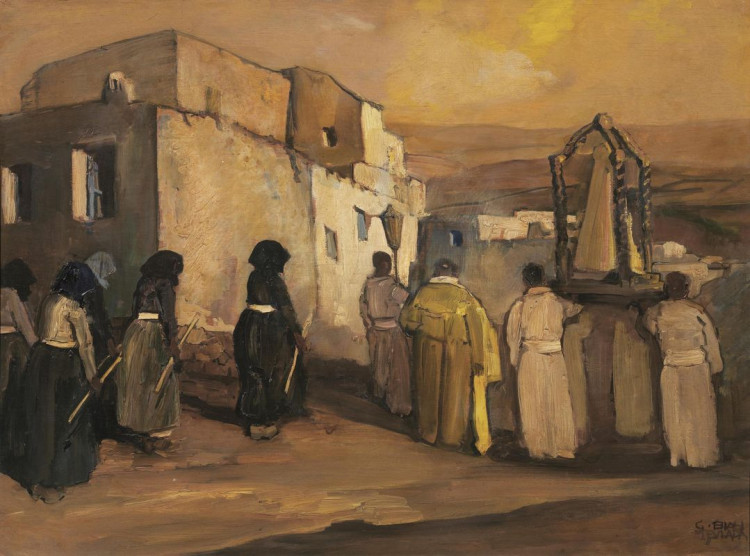
Michela Murgia
Michela Murgia’s novel ‘Accabadora’ follows Maria, a ‘soul-child’ informally adopted by Bonaria, a seamstress who is also a traditional Sardinian mercy-killer. Blending folklore with the post-war reality of the 1950s, the book explores motherhood, invisible female labour, and the ethics of euthanasia, and is often evoked in the contemporary Italian cultural and legal debate on assisted suicide.