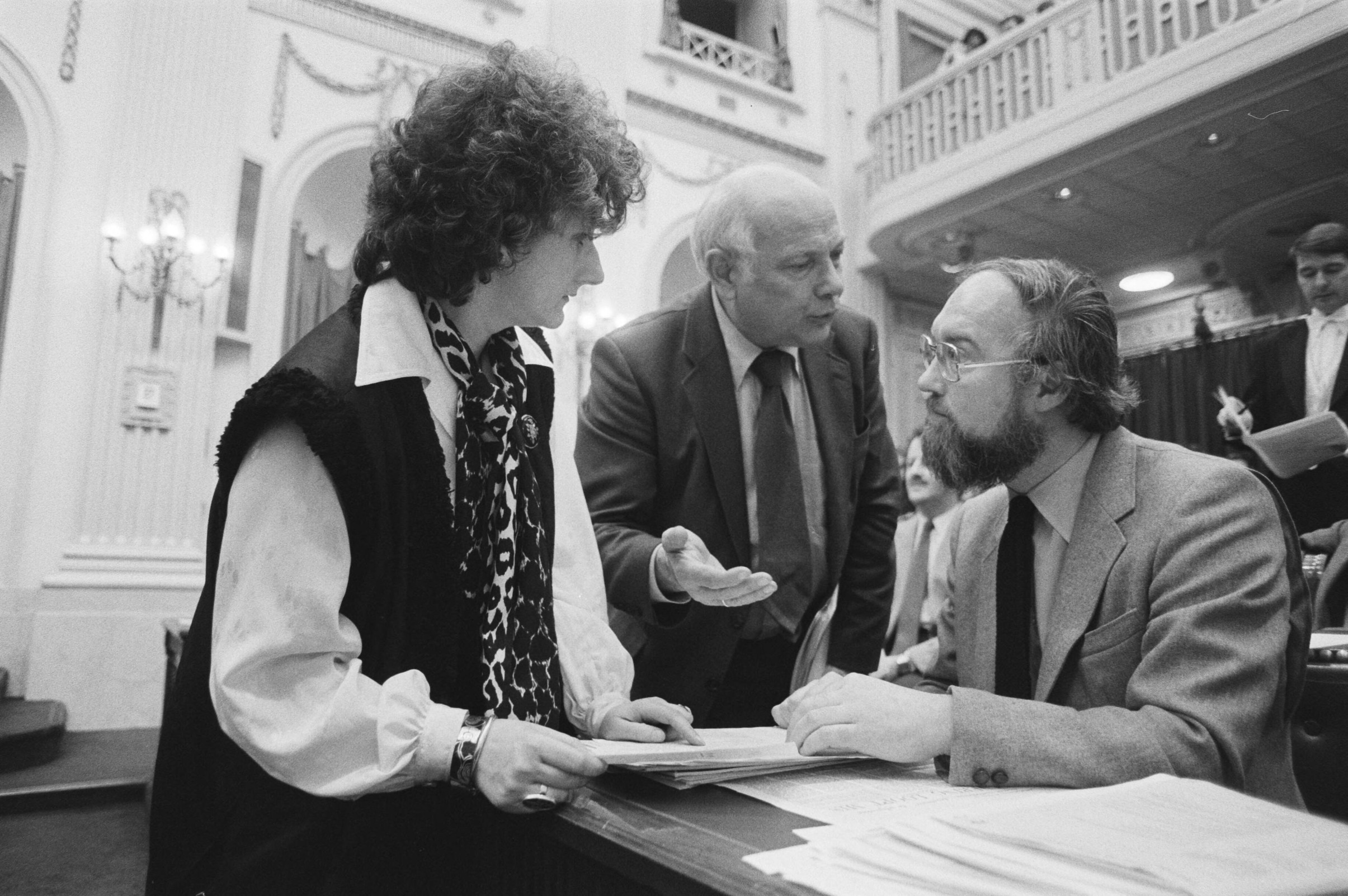
© Hans van Dijk / Anefo, Wijnie Jabaaij in Dutch parliament, Nationaal Archief, 1981
Lotti is an outspoken middle-aged woman who suffers from multiple sclerosis (a neurological condition that can lead to severe disability). Her son, writer Giph, retrospectively recounts Lotti’s illness and the end of her life. Through this narration, readers learn that she is prescribed muscle relaxants for the spasms caused by her condition. However, these lead to complete physical relaxation and cause incontinence. Additionally, Lotti finds it hard to accept the dependence on others that her illness necessitates. Initially, as her condition deteriorates, she does not want to allow district nursing into her home. She is even more opposed to the idea of a nursing home, stating she would rather be dead than admitted to such a care facility. Lotti wants to maintain control over her own life and finds it undignified when it is not she herself, but her body, that dictates her actions. In the novel, her dependence on others increases, and after she experiences a sudden, rapid deterioration of her paralysis (a so-called relapse), she reaches her limit. Her quality of life has diminished to such an extent that her previously expressed desire to die becomes pressing. Lotti reiterates her wish to her general practitioner and arranges a day for euthanasia, which indeed takes place some time later.
Ik omhels je met duizend armen portrays Lotti as a woman who was accustomed to having control: she was an executive by profession and politically active. Thus, a significant reason for Lotti’s request for euthanasia is her strong wish to exercise control and autonomy, along with her negative perception of dependency. However, the novel is not one-sided in this matter, but presents an ambivalent view. On the one hand, it shows that relationships of dependency can provide meaningful life experiences, notably through the care Lotti receives from her children and friends. While she initially struggles to accept help from them at the beginning of her illness, this becomes much less of an issue later on. In the period leading up to her death by euthanasia, she has, in her opinion, an acceptable life, partly due to this care by her loved ones. Reluctantly, she also allows nurses to care for her. On the other hand, the novel illustrates that individuals, due to their dependent situation, can reach the limits of their capacity to find meaning. Ultimately, Lotti suffers greatly from her loss of control. Wanting to remain the ‘director of her life’ and aiming to prevent her body from dictating her mind, she chooses to end her life. Ik omhels je met duizend armen does not present self-determination as the opposite of dependency; rather, it draws attention to the idea that an individual ultimately determines how much dependency they can endure. By doing so, and by showing that euthanasia can allow for a loving farewell, the novel presents a distinctly positive view of euthanasia. The novel represents the practice of euthanasia in the Netherlands as it was in the period when there was no law yet, but doctors could already perform euthanasia without risking prosecution.
Ronald Giphart, Wie waarlijk leeft. Portret van mijn moeder (Amsterdam: De Bezige Bij, 2020)
Willem van de Sande Bakhuyzen (director), Ronald Giphart et al. (writers), Ik omhels je met 1000 armen (The Netherlands: IDTV Film, 2006)
Ronald Giphart, Ich umarme dich vieltausendmal. Roman (München: List Verlag, 2001)
Ronald Giphart, Ich umarme dich vieltausendmal. Roman (München: List Verlag, 2001)

Pola Rapaport (director)
The Belgian wheelchair athlete Marieke Vervoort suffered from progressive myelopathy, a rare degenerative muscle disease. The winner of multiple medals at the 2012 and 2016 Paralympic Games experienced increasingly unbearable pain and chose to pass away through euthanasia in 2019, which is presented in a positive light. As a public figure, her case sparked widespread debate in the media.
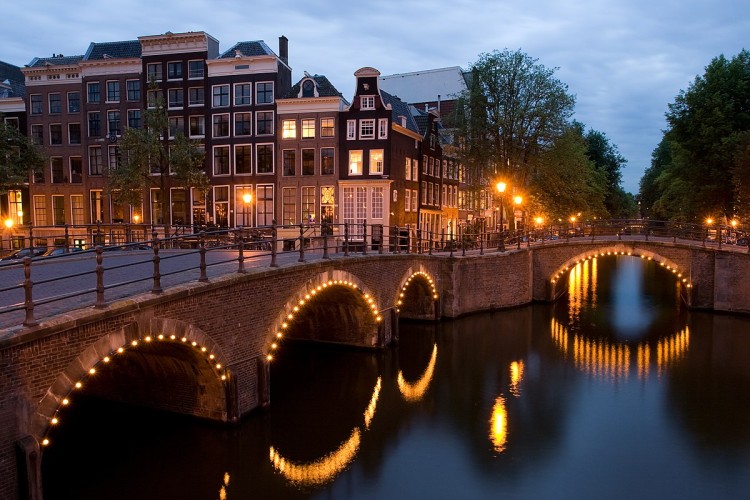
Eddy Terstall (director and writer)
Free-spirited Amsterdam resident Simon suffers from cancer and requests euthanasia, which is possible under Dutch law. The doctor complies with Simon’s request. The film represents euthanasia as one of the major achievements of a free and liberal society, with several progressive politicians citing it as a reflection of Dutch freedoms and values.