
Macías Huerta, fictional ad from *Pensión Babilonia*, 2015 (courtesy of the author)
The novel Pensión Babilonia (Babilonia Guesthouse), by Ecuadorian writer and psychotherapist Adolfo Macías Huerta, features a secret assisted-suicide society. The book opens with a tragedy: Frida, the young daughter of Laura and Dante Ospina, accidentally falls from the terrace overlooking their building’s swimming pool. Laura, a photographer pregnant with her second child, is vacuuming a sofa at home when she hears screaming and rushes to the window to find, in shock, her daughter’s unconscious body (Dante, an advertising agent presumably at work, is not in this scene). In the aftermath of Frida’s death, we follow the downward spiral of a grieving Laura, who feels she has no love left to give her new son. Laura loses her grasp of reality and starts listening to the voice of a pistol (which she either found or hallucinated), until she is admitted to a psychiatric hospital. We don’t get to witness Laura’s hospitalization, but her story continues in the last third of the novel: 17 years after Frida’s death, Laura is back at home, still figuring out how to relate to her son. The central part of the novel is narrated by Dante, who also journeys into an abyss – but one of his own making. Frustrated with narrow-minded clients, he’s eager to accept a creative challenge and perhaps win advertising awards: the association tentatively named Muertes Escénicas (Scenic Deaths) needs a new brand, because – the consultant who approaches Dante explains – ‘the word death doesn’t poll well’ and, ‘in psychological terms, we Ecuadorians are immortal’ (translated from the Spanish, as all other quotes). Arguing that accompanying a suicide is not a crime, the group helps those who want to die stage ‘a beautiful death, in the company of loved ones, [in] an unforgettable ceremony’. Dante wins over the client by pitching their rebranding as La Sociedad Ecuatoriana del Rito Terminal (The Ecuadorian Society of the Terminal Rite) and creating an astonishing media campaign with the help of photographs taken by Laura, who ignores their purpose (this entry’s illustration comes from one such ad). Making publicity for a secret society is one of the novel’s paradoxes. Even though the disturbing suicide rituals fall short of their idealization, Dante keeps investing in the enterprise. When he is accused of sexually assaulting an employee and tries to get his investment back to use as hush money, the Society dissolves, leaving him to face scandal and his complete unravelling.
Pensión Babilonia is divided into three uneven parts (approximately 20%, 50%, and 30% of the page count) respectively titled: ‘The hidden pistol’, ‘An unexpected job’, and ‘The torso and the hand’. Laura’s story (parts 1 plus 3) adds up to the same length as Dante’s (part 2), but with a different narrative strategy: Laura’s tale is told in third person, whereas Dante tells his own story in first person – so his narrative is only as reliable as his character. Those shifting perspectives complement and contradict each other, much like the two protagonists, whom Macías Huerta describes to Sueños de Papel as polar opposites: Dante is a dominant, ambitious, proud man, seeking prestige and money; and Laura is an introverted and sensitive woman, somewhat lost, searching for her identity in art but clinging to Dante because of an emotional void. This psychological depth has been hailed as a hallmark of Macías Huerta’s work by journalist Gabriel Flores, who calls Pensión Babilonia ‘a very personal novel in which [the author] puts into practice his knowledge of psychotherapy’. Besides being a psychotherapist, Macías Huerta has worked in the advertising world, which helped give realism to ‘a plot that goes from dark to dreamlike… on the edge of credibility’, as he explains to Elipsis. It’s difficult to pin down the novel as either for or against euthanasia. Like Marinou-Blanco’s film Sonhar com Leões and Rodríguez’s novel Cien Cuyes (see related Assisted Lab entries), Pensión Babilonia is uncanny and ambiguous. On one hand, the secret Society’s commitment to not let people die alone seems noble and legally sound, as a lawyer verifies the willingness of a group member called Betty before her terminal rite: ‘Do you solemnly confirm your desire to leave this life of your own free will…?’ Yet, after giving verbal confirmation, Betty has doubts and leaves the stage, only to be followed by the society’s president, who – we implicitly understand – goes on to pressure her. Thus, if the novel promotes empathy, it also portrays manipulation. The titular ‘Babylon Guesthouse’, which materializes towards the end, further suggests this is a parable of misunderstanding, corruption, and hellish descent. When the media gets word of the secret Society, a sensationalist reporter considers the many ways he could frame the story – adding a meta dimension to the novel and leaving us with the question Macías Huerta raises in the Elipsis interview: ‘at what point does the spectacle pervert?’
Though published in 2015, Pensión Babilonia had already been completed by 2013, when Macías Huerta submitted it as a manuscript to the Concurso Nacional de Proyectos para el Fomento y Circulación de las Artes (National Competition of Projects for the Promotion and Circulation of the Arts). Organized by Ecuador’s Ministry of Culture, the contest boasted an international jury, including the Colombian writer Santiago Gamboa. In November 2013, during Quito’s VI International Bookfair, the Ministry announced that Pensión Babilonia had won the ‘novel’ category; according to a press release, Gamboa ‘highlighted the quality of the winning work’ as one of the best novels he had read that year. The jury minutes, eventually printed as a foreword to the book, informed that the decision was unanimous and underscored ‘the extraordinary architecture of the novel, the character development, and the handling of the plot, always original and surprising’. While the award is an undeniable achievement – even more so considering the novel’s controversial topic – it came with the double-edged benefit of publication by the Ministry rather than by a commercial publishing house. Not only did the publication take two years to materialize, but this also rendered reprints impractical; so while Macías Huerta’s fame grew as one of Ecuador’s great novelists, with more acclaimed novels widely available since 2013, Pensión Babilonia quickly disappeared, becoming – as El Universo columnist Leonardo Valencia deems it – ‘the author’s least known work’. For those lucky enough to access it, the book comes across as both self-aware and ahead of its time. When, in the novel, Dante decides ‘to create a media scandal… to attract all those suffering from depression’, his resolution comes right after hearing about the 2011 real-world death of Jack Kevorkian, aka ‘Dr Death’ (see related entry on Barry Levinson’s film). Regardless of its poor distribution, the novel was praised by La Barra Espaciadora as one of the books of the year in 2016 (even then, ‘you had to be resourceful to get it’). In 2023, when Paola Roldán’s constitutional appeal to decriminalize euthanasia became a public discussion in Ecuador (see related entry on Roldán’s memoir), a Mundo Diners article by Gabriel Flores remembered that the theme of ‘dignified death also resonates in novels’, recommending Pensión Babilonia as one of five titles that ‘explore the concept of a good death, offering diverse perspectives and delving into the emotional and ethical decisions involved’.
Adolfo Macías Huerta, ‘Pensión Babilonia’, Ministerio de Cultura y Patrimonio del Ecuador
‘41 proyectos fueron premiados en el marco de la Feria Internacional Del Libro Quito 2013’, Ministerio de Cultura y Patrimonio

Gustavo Rodríguez
Eufrasia Vela cares so well for the affluent elderly in Lima, that they start asking her to assist in their deaths – and the ensuing dilemmas propel Gustavo Rodríguez’s novel ‘Cien cuyes’. Approaching the problem of loneliness in aging societies with humour and without judgement, the novel has sparked debate on assisted dying at the nexus of class, caregiving, and community.
Paolo Marinou-Blanco (director)
Gilda, a Brazilian immigrant in Portugal, has an inoperable cancer and wants to die. After various failed suicide attempts, she joins the sketchy group Joy Transition International and meets Amadeu, a young undertaker who also wants to die. Their search for a peaceful death is the plot of this comedy that ends in Spain, where a doctor is willing to bend the euthanasia bureaucracies for immigrants.
Barry Levinson (director), Adam Mazer (writer)
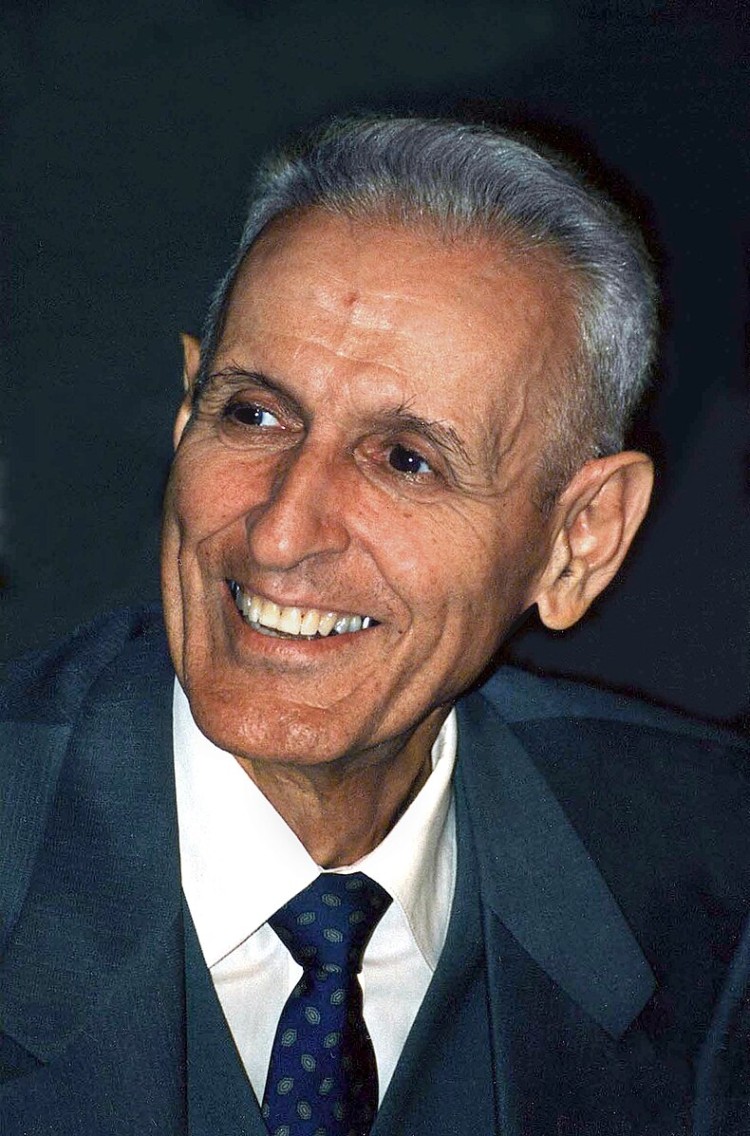
‘You Don’t Know Jack’ recounts the period in Dr. Jack Kevorkian’s life between 1990 when he assisted in the death of Janet Adkins and 1998 when, after assisting in over 100 deaths, he was convicted of second-degree murder for assisting in the death of Thomas Youk. The film portrays the controversial Kevorkian in a very flattering light, as an underdog and hero, and, above all, a caring doctor.

Paola Roldán
Published two years before her constitutional victory for the right to die, Paola Roldán’s memoir narrates her journey of self-discovery and of living with ALS, a chronic disease that left her paralyzed and dependent on a respirator. Dedicated to her son and having a spiritual dimension, the 2022 book helped promote Roldán’s plea for self-determination in Ecuador’s religious-political landscape.