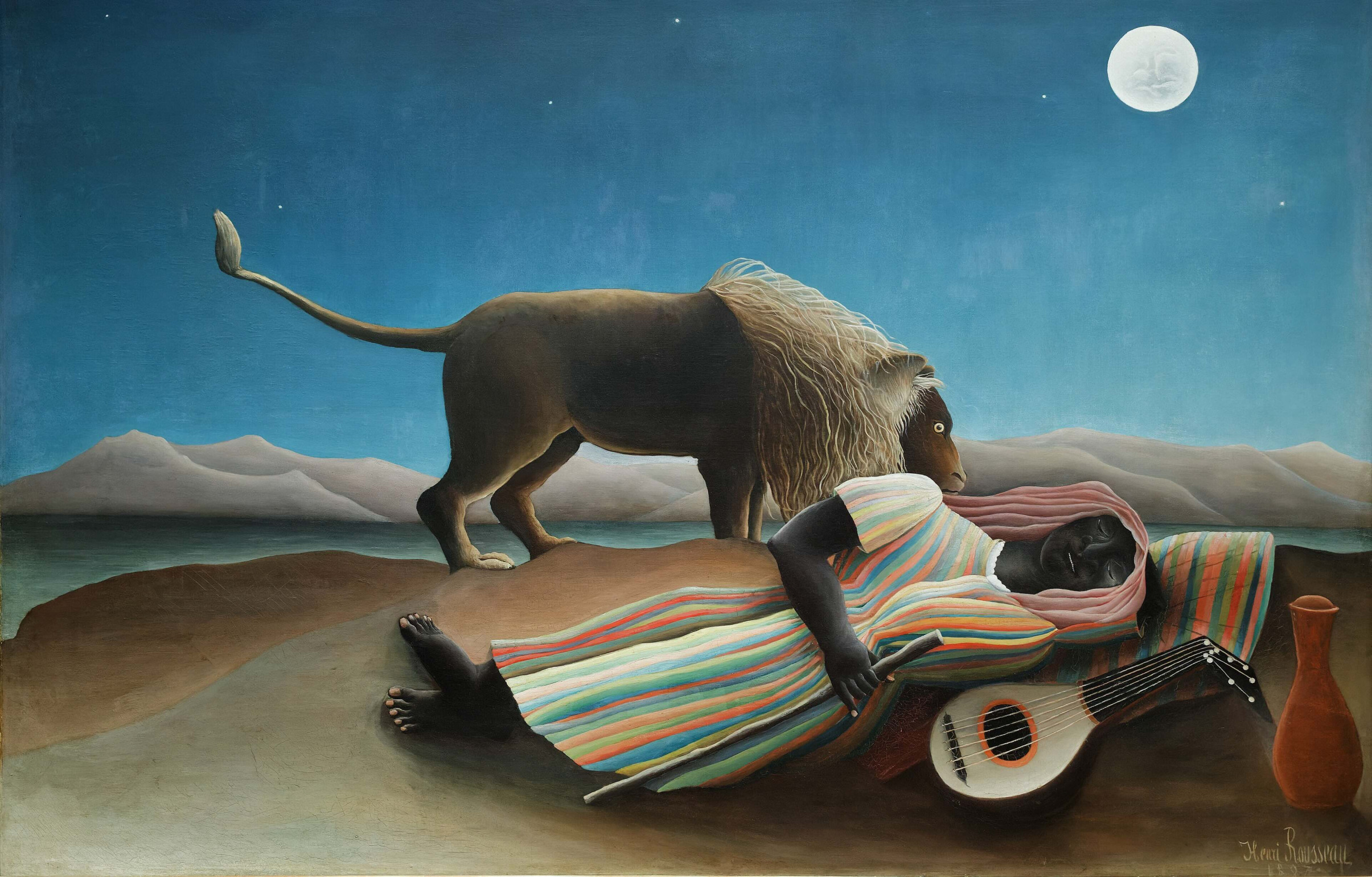
Henri Rousseau, ‘La Bohémienne endormie’, 1897
Gilda, the protagonist of Sonhar com Leões (Dreaming of Lions), has attempted suicide multiple times – and failed. She has an inoperable spinal-cord cancer and wants to die, as she puts it, ‘before becoming a lump of meat’ (translated from the Portuguese as all other quotes, unless noted otherwise). She fears the pain of a violent suicide as much as she fears surviving only to become incapacitated and in greater pain… And hence her hesitating attempts, such as the one with which the movie opens: Gilda, with a revolver trained on her head, is about to pull the trigger when she is surprised by her husband, so the shot accidentally hits both and fails to kill either (at some point, Gilda’s husband tires of her attempts and leaves her). But Gilda also dreads dying ‘naturally’, in excruciating pain – like her father, who withered away from pancreatic cancer in Brazil. Through a flashback, the film shows us how a pre-teen Gilda witnessed relatives visiting her moribund father and performing what Gilda came to see as selfishness: the military uncle urging ‘fight!’, the aunt praying for a miracle, the cousin bringing food yet saying nobody thanked her… Only Gilda recognizes the finality of her father’s illness and resolves that, when her time comes, she will die her way. Leaving the hospital after her latest attempt, Gilda finds a flyer for Joy Transition International, a dubious association that teaches the terminally ill about the best ways to commit suicide. Their motto: ‘Our life, our death’. The cost: only 400 Euros. Gilda senses a scam, but signs up anyway. Her grumpy no-nonsense demeanour clashes with the cruel optimism of the workshop leaders, who facilitate sessions that go from informative (suicide-failure statistics) to performative (how to match your inner and outer smiles). When Gilda resists putting on an oversized-smile mask, a facilitator explains ‘it’s for legal reasons… if we’re caught, we can say we’re putting on a play’. During a buddy-system activity, Gilda meets the younger Amadeu, who also wants to die – but for a different reason, which becomes a key counterpoint in the film. Amadeu, who can talk with the dead, works at a funerary, where he applies makeup to the deceased, finishes their coffins, and asks them what death is like. When it becomes evident that Joy Transition won’t provide the peaceful death advertised, Gilda takes matters into her own hands, with Amadeu in tow. First, they try to rob sodium pentobarbital from a vet clinic; then, they bribe a workshop leader to connect them with a doctor willing to help non-residents in Spain, where euthanasia is legal. It is in Spain that the fates of Gilda and Amadeu diverge, bringing the film to a close while establishing a clear distinction between assisted dying and suicidal ideation.
The Brazilian lawyer Cynthia Araújo, author of a book on difficult healthcare conversations, has called the film an ‘anti-Werther’ work of art, because it deglamourizes suicide. By pitting Amadeu’s suicide ideations against Gilda’s compelling will to live and die with dignity, Araújo argues the film follows the World Health Organization’s directive that art should not glamourize suicide. Multiple critics have noted the productive dissonance between form and content in Sonhar com Leões. According to an Expresso critic, the film manages to talk about the right-to-die and be funny, while a contributor to Dirty Movies underscores how it is unafraid to confront a taboo, plunging straight in with Gilda’s double shooting. In interviews, the director Marinou-Blanco explained he uses comedy ‘because it softens life’s hard edges’ (in Deadline Hollywood, originally in English) and because ‘drama would have been too obvious’, while ‘comedy can be an act of courage’ (in Dizer Podcast). El País adds that, on top of the ‘uncomfortable humour’, the film gains an extra confrontational dimension when Gilda breaks the fourth wall to directly challenge the viewers (a metalingual strategy popularized by TV series like Fleabag). In one particularly striking scene, Gilda dares us not to turn away: ‘This is the part you don’t want to see, right? You want to ignore? Look! Take a good long [expletive] look!’. Thus, more than a postmodernist artifice, piercing the fourth wall through humour to confront death – and our avoidance of death – serves a central function. As the Cinemático critics highlight, this is also a way for Gilda to regain narrative control over a rogue illness. Even though there is a linear aspect to Gilda’s pursuit of a peaceful death, the story develops as a spiral, with abundant repetitions: suicide attempts, cringe workshops, Amadeu’s questioning of the dead, the singing of Caymmi’s ‘Maracangalha’... These elements appear and reappear, as in a modern fable spiralling out in search of resolution. The last two of these recurring elements are perhaps the most rich, as their final iterations change the initial meanings: when Amadeu fails to ask Gilda what death looks like, we understand he has gained a will to live; and when the carnival song ‘Maracangalha’ reemerges at the end of the film, its lyrics become a commentary on the diverging fates of Gilda and Amadeu (‘I’ll go to Maracangalha, I’ll go… And if Anália won’t come with me, I’ll go alone’). Another text evoked is The old man and the sea, that gives the film its title: in bed, Gilda reads to Amadeu a passage in which the titular ‘old man’ dreams of lions on an African beach, a peaceful scene he witnessed in his youth.
The three countries that co-produced the film – Portugal, Brazil, and Spain – are present in the story in more than one way. First, the characters’ accents help situate us: Gilda and her husband are the only ones with a Brazilian accent among speakers of European Portuguese, therefore we must be in Portugal; later, as Amadeu and Gilda travel to Mallorca, they carry their own accents into Spanish. These languages let us glimpse three very different legal landscapes, as well as the inequalities they engender. As a Brazilian immigrant in Portugal, Gilda has no access to legal assisted dying; the practice remains strictly banned in Brazil, and Portugal’s 2023 assisted-dying bill was under parliamentary debate when the film began production. In the movie’s timeline, only Spain had an operational law regulating euthanasia, effective since 2021 (see related entry on Gina Montaner’s memoir). Portugal did approve its law decriminalizing and regulating assisted dying in 2023 (see related entry on José Saramago’s novel), but the legislative process was carried out without presidential support; Ministerial regulations were never drafted, so the law’s application was suspended. Then, in 2025, the Constitutional Court deemed various articles of the 2023 law unconstitutional, freezing the planned reform – with the Judicial and Executive powers now sided against the Legislative. This legal vacuum validated the movie’s premise of access to assisted dying being a rare privilege, which resonated with the public in Portugal and beyond. The film won the 2026 Sophia Award for Best Comedy Feature at the Portuguese Film Academy Awards, and was widely promoted in Spain by the Derecho a Morir Dignamente foundation. At some point in Sonhar com Leões, Gilda applies for financial aid to die in Switzerland (rejected), then considers the residential requirements in Holland and Belgium (unrealistic for her), and concludes: ‘It’s death by bureaucracy’. When Gilda finally gets a promising tip about a Spanish doctor willing to bend bureaucracies, we can’t help but feel the film is as much about dying as it is about immigration: depending on our passports, we need expensive visas – and sometimes illegal coyotes – for the final border-crossing.
Paolo Marinou-Blanco (director), ‘Dreaming of Lions’, Promenade Films
‘Paolo Marinou-Blanco – Estagiar Com o Spike Lee, Sonhar Com Leões e Financiar Cinema’, Dizer Podcast – Episode 28
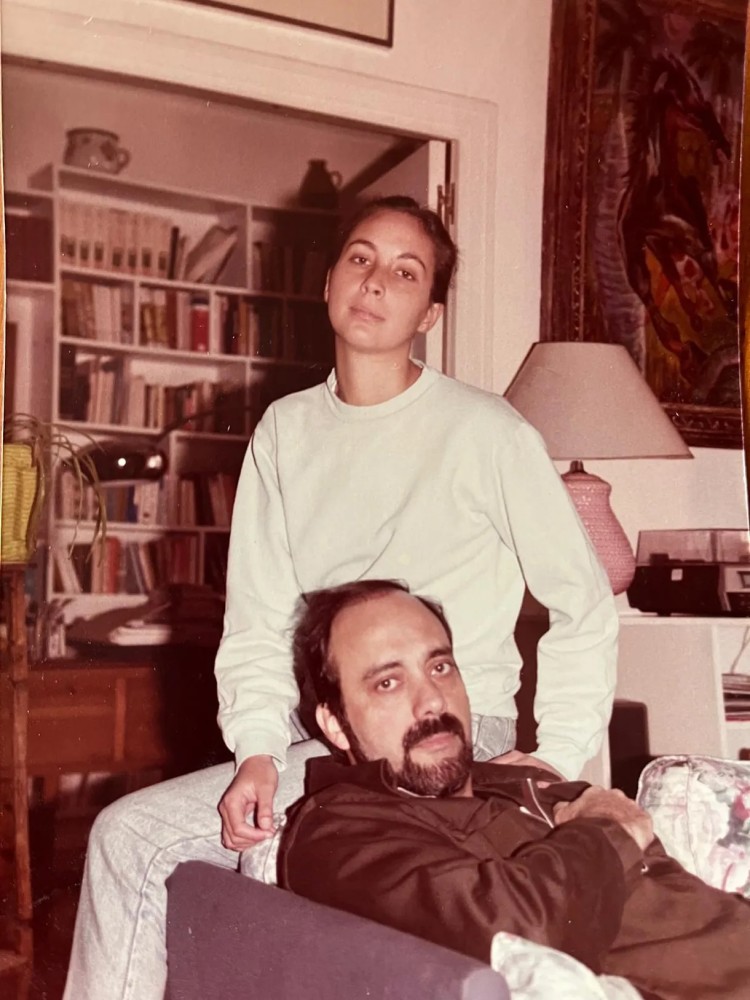
Gina Montaner
About to turn 79 and suffering from what seemed to be Parkinson’s, the Cuban-Spanish writer Carlos Alberto Montaner asked his daughter to help him seek an assisted death. In this memoir, Gina Montaner recounts how her father, as a political exile, fought for democratization in Cuba and, as a naturalized citizen, for the right to access legal euthanasia in Spain.
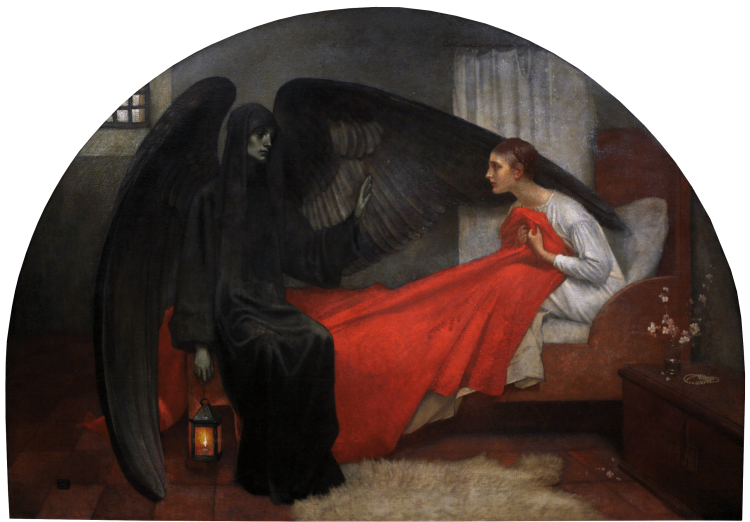
José Saramago
‘As intermitências da morte’ by Portuguese writer José Saramago explores the economic, political, religious, and ethical questions that would be raised if, suddenly, people stopped dying. Distinguishing between ‘to kill’ and ‘to give death’, this allegorical novel was invoked in the debate on the legalization of assisted dying in Portugal and of orthothanasia in Brazil.

Adolfo Macías Huerta
Macías Huerta’s ‘Pensión Babilonia’ uses a split narrative to explore grief and ethics through an assisted-suicide society: while Laura loses her grasp of reality after her daughter’s death, her husband Dante dives into the challenge of rebranding the secret group. Portraying media manipulation and the spectacle of death, the novel won a 2013 prize from Ecuador’s Ministry of Culture.
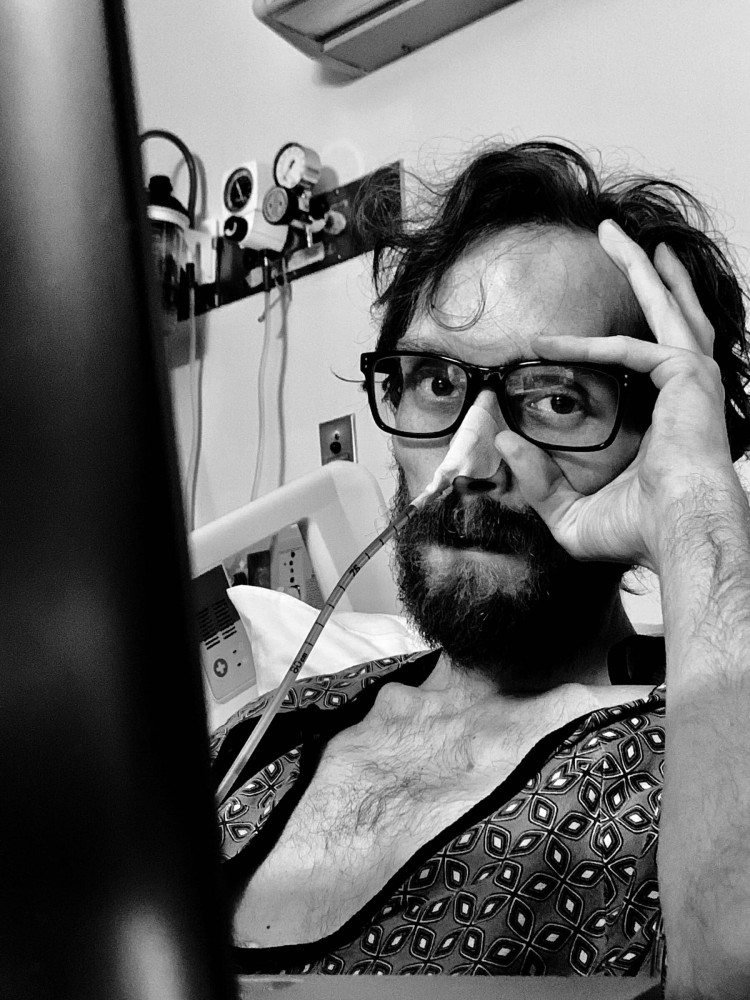
Amanda Villegas
In this series of photographs, Amanda Villegas documents the final days in the life of her husband, Chris Davis, as he dies from bladder cancer. Although Chris wanted to access medical aid in dying, he was unable to do so because of misinformation and procedural requirements in California’s End of Life Option Act at the time of his death.