Anna Elsner on the French Citizens’ Council on End-of-Life Care, France 24

Interview with Anna Elsner as a French citizens’ council of 150 members of the public will meet Friday to begin discussions on end-of-life care, including whether assisted suicide should be legalised. As French laws have evolved over the last two decades, calls have increased to allow medically assisted deaths for terminally ill patients.
The Assisted Dying Debate Is Really About How We Treat the Living

A recent push to legalize assisted dying in France obscures more fundamental problems that plague end-of-life care.
New Publication in Law and Literature by Anna Elsner and Vanessa Rampton
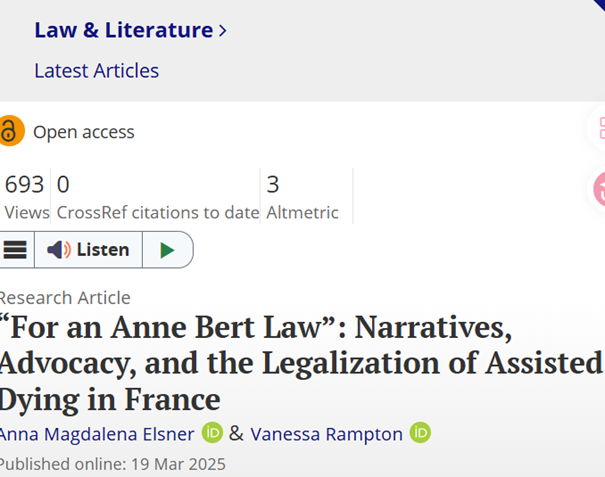
This article examines how French author Anne Bert, who received euthanasia in Belgium, produced several cultural productions that influenced France’s assisted-dying debate. It therefore highlights the profound impact of individual storytelling on legislative discourse.
Language Matters: The Semantics and Politics of 'Assisted Dying'
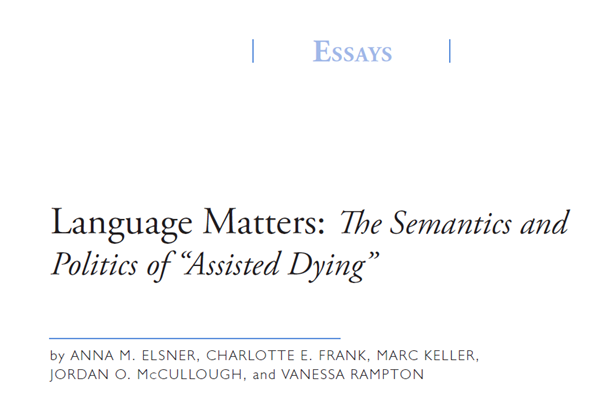
Our lab publication reflects on the ways in which the language used to describe ‘assisted dying’ is itself a political choice with concrete implications. In short, language matters when thinking about assisted dying.
Paper at Association for the Study of Modern and Contemporary France Annual Conference

Jordan McCullough presented a paper on the role of stories in the assisted dying debates in France and Belgium as part of the annual conference of the Association for the Study of Modern and Contemporary France, which took place at the University of Southampton. Jordan’s paper focused on the story-cases of Vincent Humbert and Jean-Marie Lorand.
Seed Meeting Institut Français d'Ecosse, Edinburgh
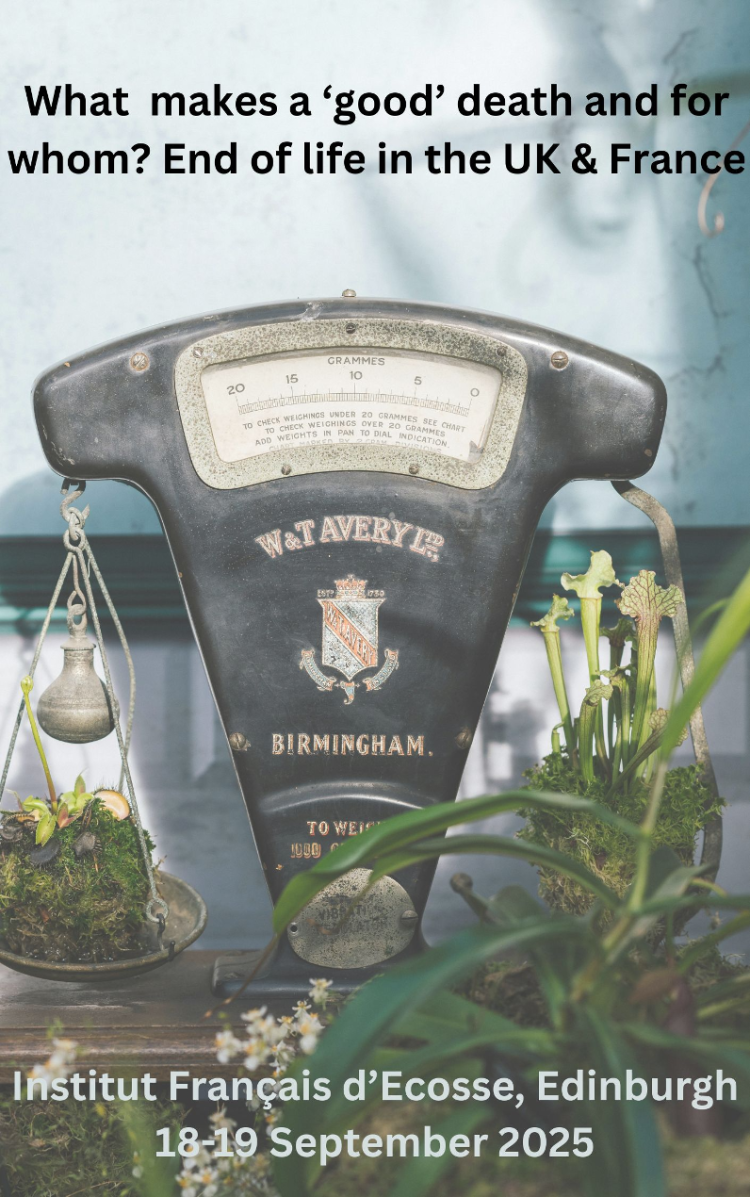
The meeting, organised by Ben Kasstan Dabush (University of Edinburgh) and Séverine Mathieu (EPHE), asked what constitutes a “good death” in France and the UK, exploring cultural and ethical differences and similarities. Jordan McCullough & Anna Elsner contributed by introducing Assisted Lab’s transnational work on the role of the arts in shaping public and legal discussions of assisted dying.
'Tout s’est bien passé' by François Ozon

François Ozon (director and writer), Emmanuèle Bernheim (writer), Philippe Piazzo (writer)
Following a transient ischemic attack, André Bernheim, the father of novelist Emmanuèle Bernheim, asks his daughter to help him end his life. This film adaptation of Bernheim’s novel follows Emmanuèle and her sister, Pascale, as they come to terms with their father’s decision and try to navigate the complex legalities that surround assisted dying for French citizens in Switzerland.
'Je vous demande le droit de mourir' by Vincent Humbert
Vincent Humbert (with Frédéric Veille)
Following a life-changing accident, which left Vincent Humbert paraplegic, blind and mute, the young man decided that he wanted to end his life and wrote to the French President in search of help. This text is his story, one of the most significant in the history of the assisted dying debate in France.
'Je ne suis pas un assassin' by Frédéric Chaussoy

Frédéric Chaussoy
Dr Frédéric Chaussoy, the intensivist who made the decision to turn off Vincent Humbert’s life support machine, shares his story in this short, powerful text. Blending a first-person account of the events leading up to Vincent’s death with engaged writing and insights from Chaussoy’s family, the text is an ardent defence of the doctor’s actions and calls France to do better at accompanying death.
Projections et table ronde dans le cadre du festival de film ‘Quel Avenir Pour la Mort en France ?’
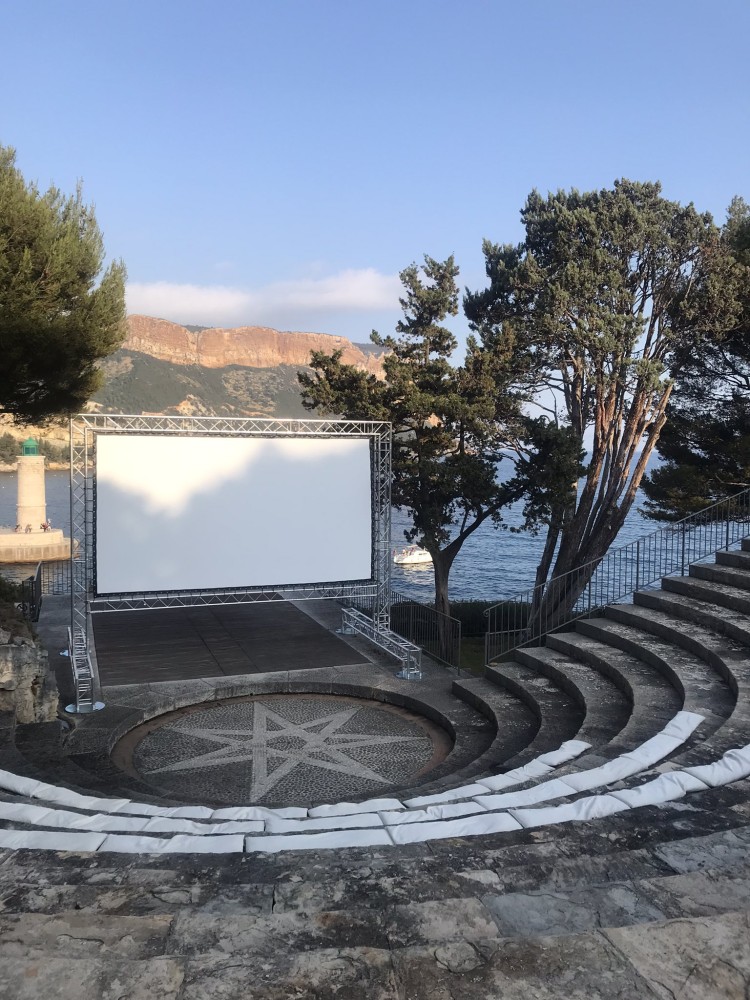
En collaboration avec Ciné-Calanques, la Fondation Camargo, et la Maison de Gardanne, Assisted Lab a organisé un petit festival de films sur la fin de vie. Trois projections ont été suivies de discussions avec les réalisateurs et, dans le cas d’Une maison au bord du monde de Pascal Cesaro, avec les intervenants en soins palliatifs présents dans le documentaire.
'Le tout dernier été' by Anne Bert
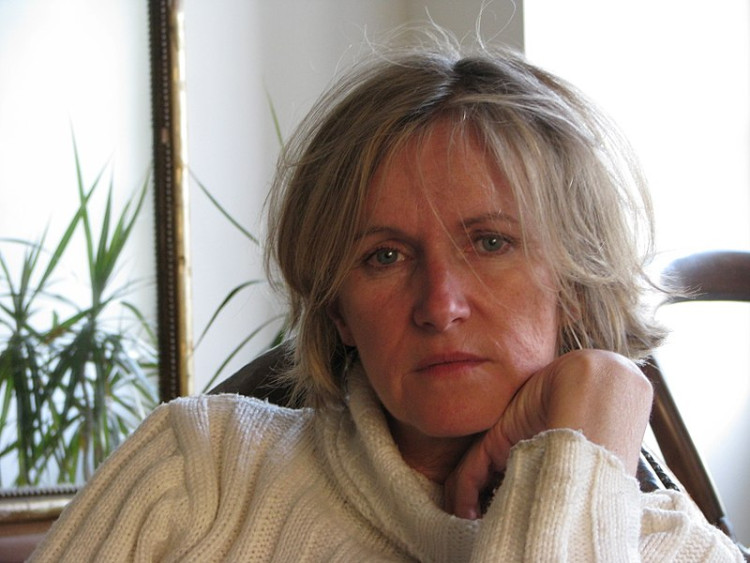
Anne Bert
French author Anne Bert sees the right to choose her own time of death as a fundamental human right, and this is her story of invoking that right by travelling from France to Belgium to receive an assisted death.
'Dies Irae' by Danièle Saint-Bois

Danièle Saint-Bois
Following two extremely difficult years suffering with cancer, artist Alicia D. decides she wants to end her life. With the help of her doctor and a nurse, who is also a love interest, Alicia receives an actively hastened death, beyond the provisions of the 2005 Leonetti Law.
'Intouchables' by Olivier Nakache
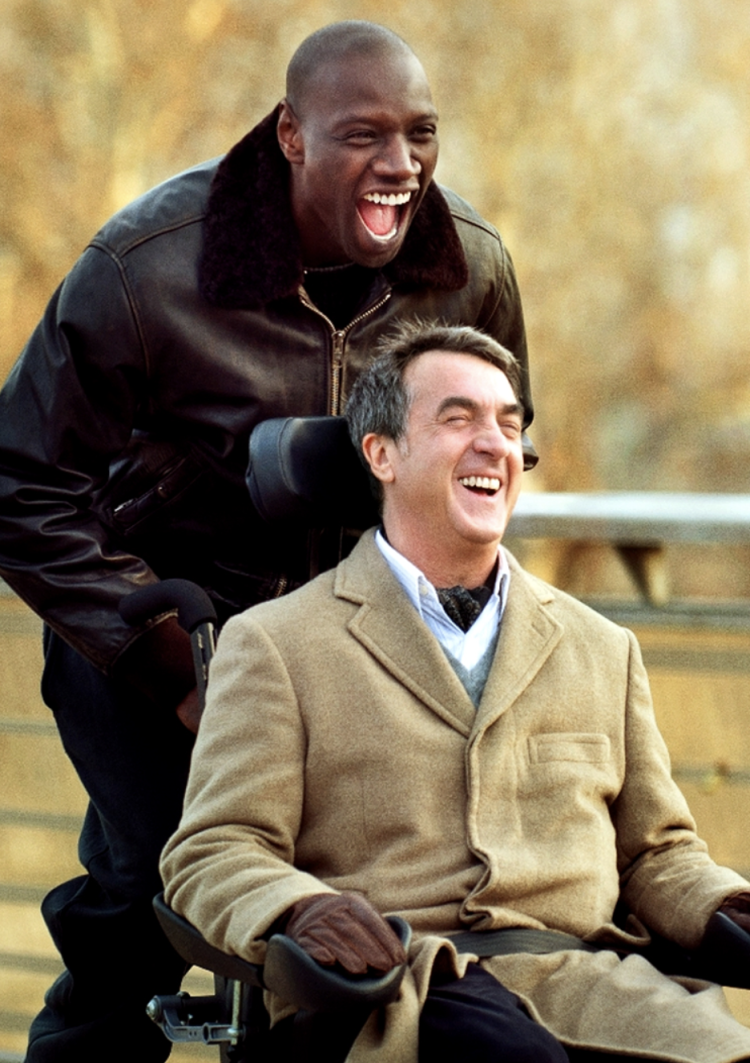
Olivier Nakache (director and writer), Éric Toledano (director and writer), Philippe Pozzo di Borgo (writer)
Based on a true story, this film recounts the unlikely friendship between Philippe, a very wealthy, widowed quadriplegic, and his hired caregiver Driss, a young man living in Paris’ poorer suburbs. As they get to know and come to trust one another, each shows the other something of his way of life, rekindling in the process his respective sense of purpose and joie de vivre.
'Amour' by Michael Haneke
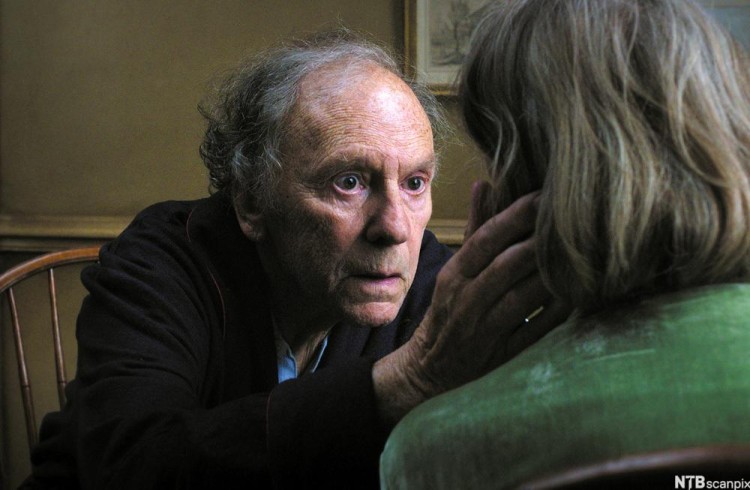
Michael Haneke (director and writer)
Diagnosed with a severe, neurodegenerative condition, Anne steadily declines into a state of near paralysis, leaving her entirely dependent on her husband, Georges, and the carers he employs. Following ever-increasing pressures on Georges, he makes the snap decision to suffocate his wife, in what is presented as a mercy killing, calling us to question the definition of an assisted death.
‘Ma vérité sur l’affaire Vincent Lambert’ by Éric Kariger
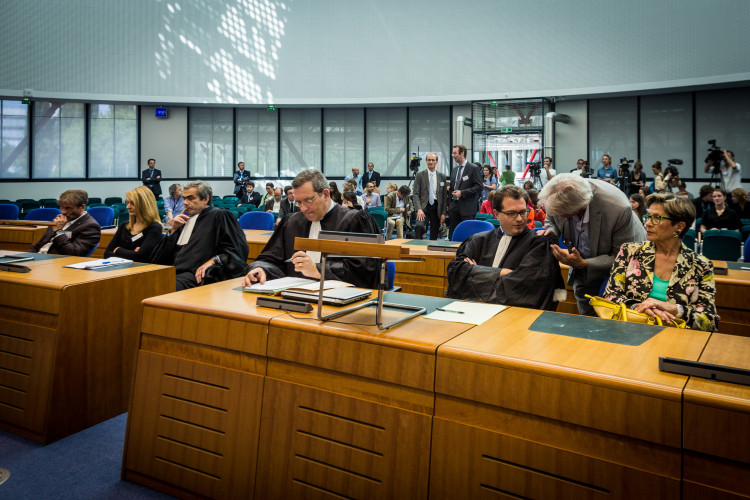
Éric Kariger (with Philippe Demenet)
In this short text, Vincent Lambert’s former physician, Éric Kariger, shares his version of the events that led to the ‘Vincent Lambert affair’, a legal and media storm that followed the decision to withdraw the interventions that were artificially sustaining Vincent’s life. In question-and-answer format, the text presents Kariger’s truth, seeking to clear his name in the courts of public opinion.
'Lettre à D. Histoire d’un amour' by André Gorz
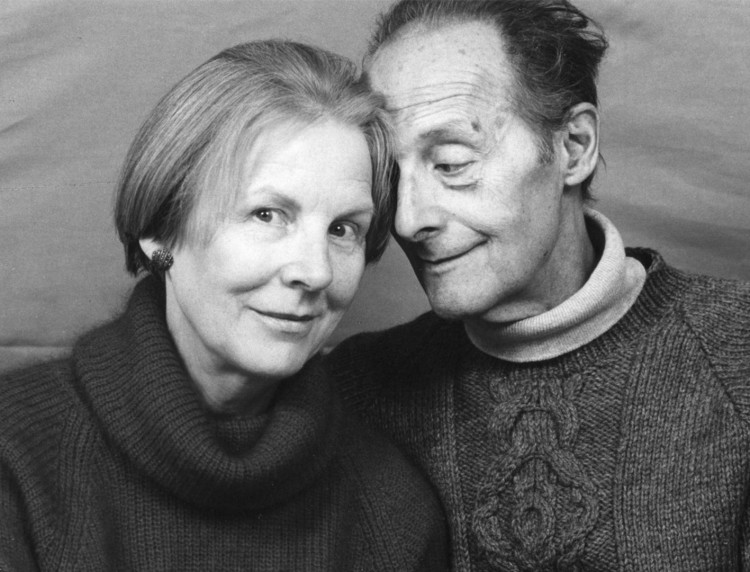
André Gorz
The social philosopher André Gorz cared for his ill wife Dorine for two decades. In 2007, they took their own lives together. A year earlier, Gorz had published a narrative public love letter to his wife which was subsequently read by both the media and assisted dying interest groups as a farewell letter and explanation of their motivation for suicide.
'Un Beau Matin' by Mia Hansen-Løve
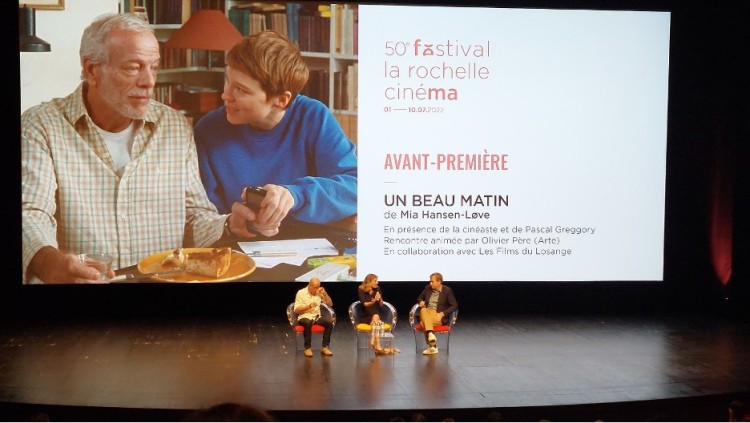
Mia Hansen-Løve
Sandra, a single mother of an eight-year-old daughter, accompanies her father through his care after being afflicted with a neurodegenerative disease. The film shows her father’s rapidly deteriorating state and the difficulties posed for the family as he ceases to recognize his family members or surroundings.
'Quelques heures de printemps' by Stéphane Brizé
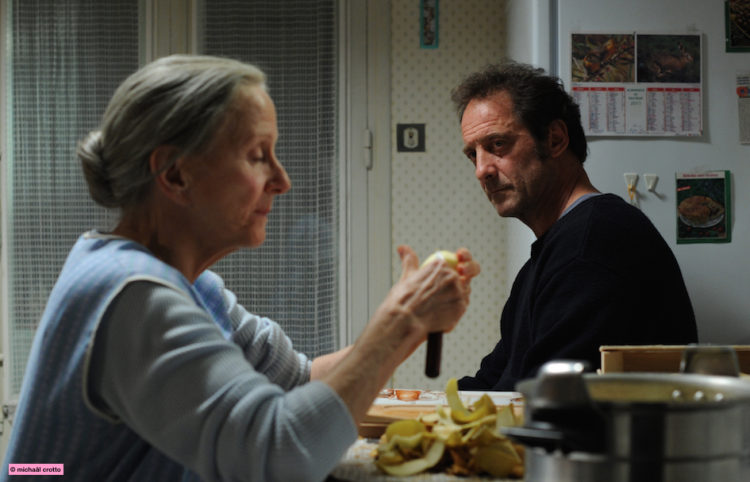
Stéphane Brizé (director and writer), Florence Vignon (writer)
Following 18 months in prison, Alain goes to live with his elderly mother, who is living with cancer. Knowing that her cancer is progressing, Alain’s mother decides that she wants to end her life. Although he is initially sceptical, Alain decides to support her decision to end her life and travels with her to Switzerland, where their extremely tumultuous relationship is restored on her deathbed.
Cultures of Disenfranchised Grief: An Online Work-in-Progress Series
An online series bringing together international scholars in the Arts, Humanities and Social Sciences to discuss disenfranchised grief in various late- and end-of-life contexts.
Literature and Medicine
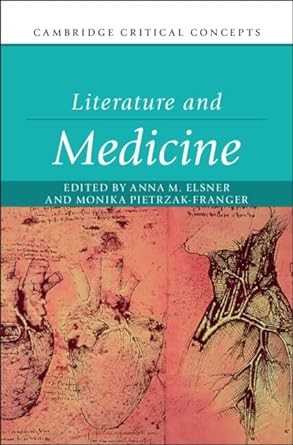
Volume on Literature and Medicine edited by Anna Elsner and Monika Pietrzak-Franger in Cambridge University Press’s Critical Concept Series published.
Workshop on Disenfranchised Grief at the End of Life
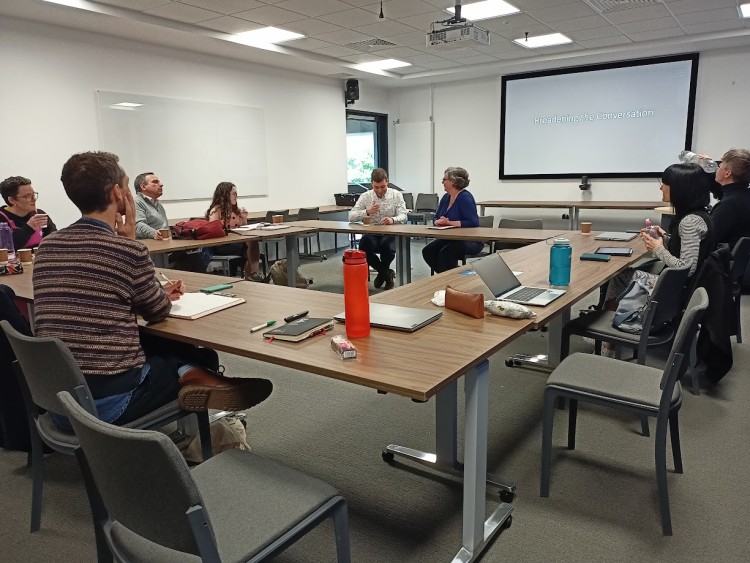
On Friday 28 June 2024, a group of international researchers, from a range of disciplines, came together in Newcastle University to discuss the question of disenfranchised grief at the end of life and work towards a edited collection on the topic. The workshop was organised by Jordan McCullough and featured input from scholars working on assisted dying, late-life care and perinatal loss.
Early Career Workshop
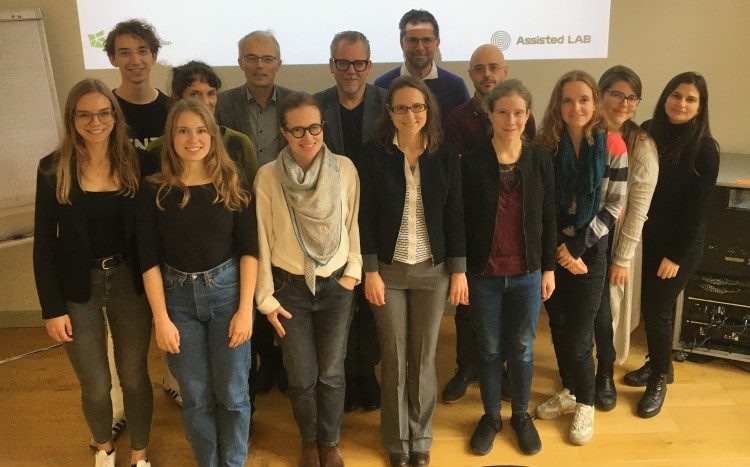
Early Career Workshop for literature graduate students at the University of Zurich with Francesca Dell’Oro and Anna Elsner. Participants explored how to present their research and trajectory, drawing on the experience of Assisted Lab as a model for collaboration and creativity.
Anna Elsner Senior Fellow at the Collegium Helveticum
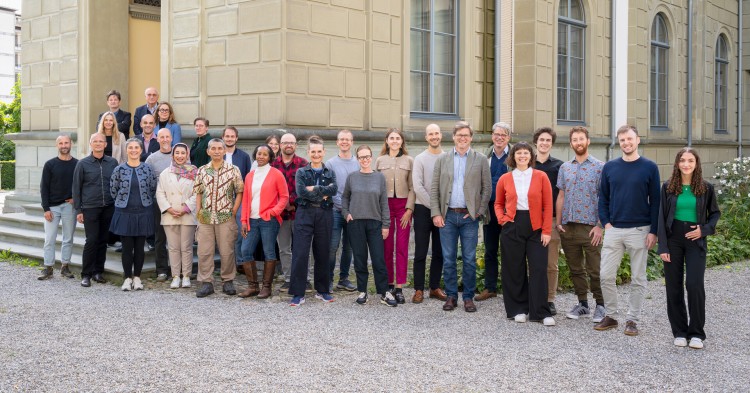
During her 2024–25 Senior Fellowship at the Collegium Helveticum (ETH, UZH, ZHdK), Anna will work on a book manuscript that forms part of her broader project on assisted dying in ethics, law, and aesthetics, as well as tracing its connections to the cultural history of palliative care in France. More info here: https://collegium.ethz.ch/fellows/fellow-year-2024-2025/anna-magdalena-elsner
End of Life Stories Workshop at McGill International Palliative Care Congress
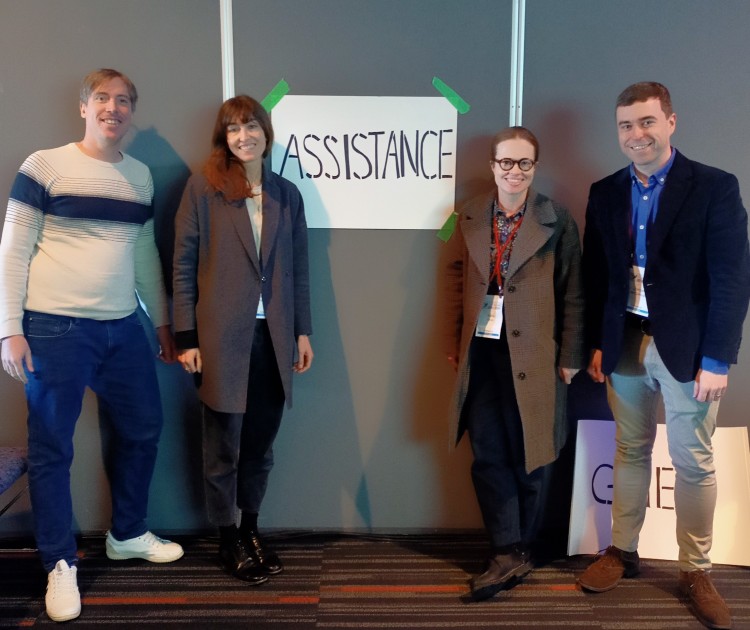
Using end-of-life stories in films and photographs, this workshop shed light on the relationship between palliative care and assisted dying. It began with short presentations using material from Switzerland, France, California, and Québec. The second part of the workshop was a discussion of how patient stories complicate the assisted dying-palliative care relationship in Canada and abroad.
'Schlemm' by Nicola Bardola

Nicola Bardola
The elderly spouses Paul and Franca Salamun have decided to die together with the help of an assisted dying organisation. Paul suffers from bladder cancer, Franca is tired of living and does not want to stay behind without her husband. Although their son Luca can understand the decision, it is difficult for him to find a way to emotionally process her death.
Research Seminar at Lisbon ERC Film and Death Project
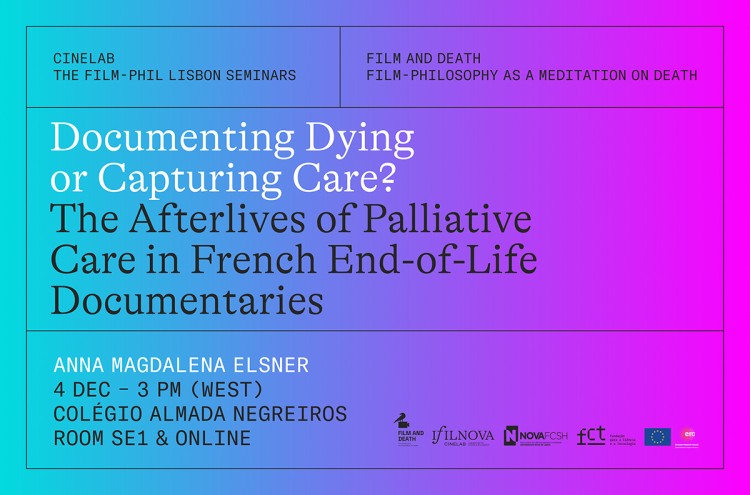
This talk centers on three French documentaries—Les yeux ouverts (Frédéric Chaudier, 2010), Une maison au bord du monde (Pascal Cesaro, 2018), and Les Equilibristes (Perrine Michel, 2020)—to examine how they engage with palliative care, a medical subspecialty that, since Cicely Saunders’s pioneering work in the 1970s, has become medicine’s primary approach to addressing death.
'Chronique d’une mort décidée' by Vincent Fooij

Vincent Fooij (director), Jean-Marie Lorand (writer)
During the last three weeks of his life, former journalist and parliamentary aide, turned assisted dying activist, Jean-Marie Lorand invited filmmaker Vincent Fooij into his home to make a final, documentary testimony of his life. The film attests to Lorand’s physical, mental and emotional suffering and serves as a justification for his much-longed-for assisted death.
'Ma dernière liberté: Journal d’une mort décidée' by Jean-Marie Lorand
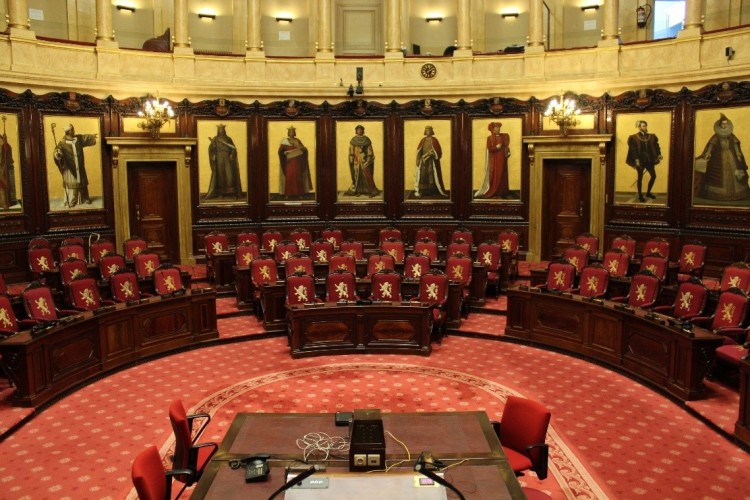
Jean-Marie Lorand
This text is a published version of the diary kept by former journalist and parliamentary aide, turned assisted dying activist, Jean-Marie Lorand during the last months of his life. Lorand was an influential figure in public debate and his testimony was shared during the hearings in the Belgian Senate prior to the introduction of the country’s Act on Euthanasia (2002).
'Accabadora' by Michela Murgia
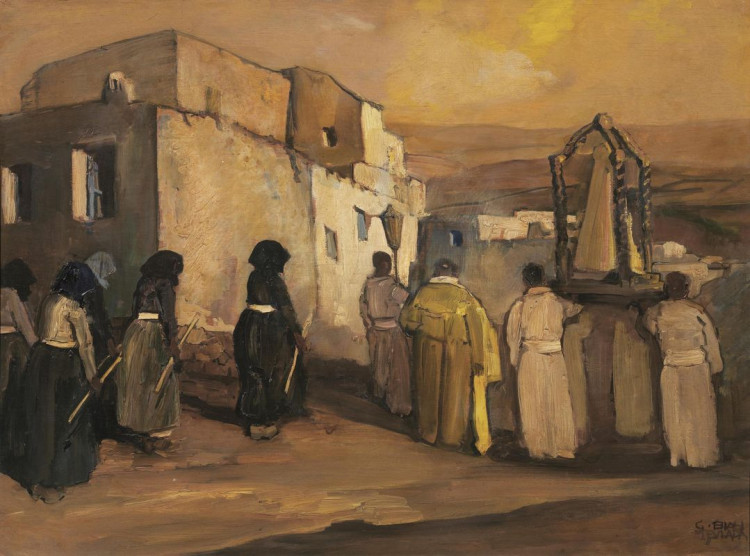
Michela Murgia
Michela Murgia’s novel ‘Accabadora’ follows Maria, a ‘soul-child’ informally adopted by Bonaria, a seamstress who is also a traditional Sardinian mercy-killer. Blending folklore with the post-war reality of the 1950s, the book explores motherhood, invisible female labour, and the ethics of euthanasia, and is often evoked in the contemporary Italian cultural and legal debate on assisted suicide.
'Door eigen hand. Zelfmoord en de nabestaanden' by Joost Zwagerman
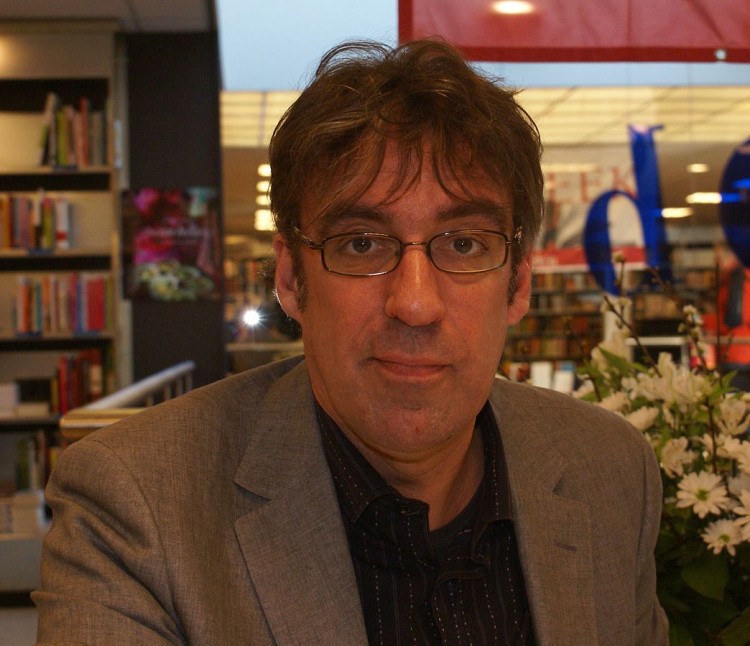
Joost Zwagerman
In this book of essays and interviews on suicide, writer Joost Zwagerman argues that medically assisted dying for psychological reasons is unwarranted. The author, who took his own life in 2015, has been a prominent voice in Dutch discourse surrounding this issue.
'The Mother Situation' by Matt Day

Matt Day (dir.)
In this short film, three adult siblings come together for their mother’s planned assisted death only to discover that she has changed her mind. A blackly comic look at the coercion that could emerge in assisted dying situations, made as Australia was beginning the legalisation process.
'A Message to the Standing Committee on Justice and Solicitor General' by Sue Rodriguez
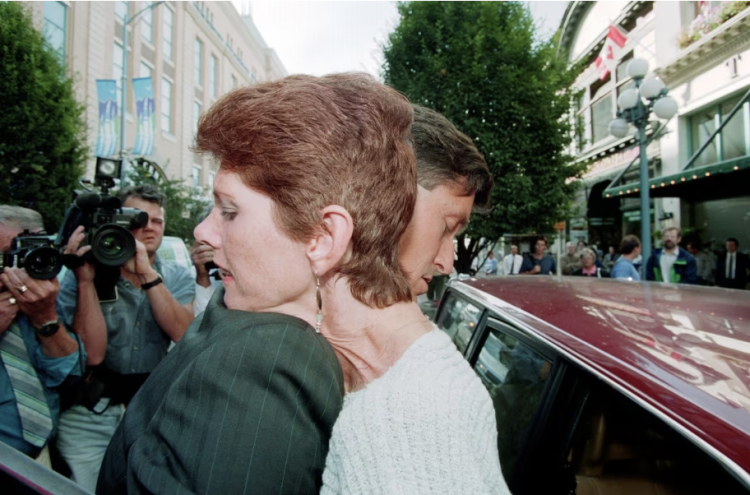
Sue Rodriguez
In this videotaped address to Parliament, Sue Rodriguez, who was dying of ALS and wanted an assisted death, asks ‘If I cannot give consent to my own death […] who owns my life?’ While the Supreme Court of Canada heard her case in 1993 and ultimately decided against her, the publicization of Rodriguez’s story informed much public thinking about assisted dying laws in Canada.
'SuissID' by Vincent Gerber

Vincent Gerber
Set in Switzerland, in an unspecified future, the company SuissID is active in the field of assisted suicide. Despite a veneer of customer service, the only thing that counts for them is financial success; due care criteria and the protection of life no longer play a role in this dystopian society.
'Last Cab to Darwin' by Jeremy Sims

Jeremy Sims (director and writer), Reg Cribb (writer)
Loosely based on real events in the mid-1990s during a brief period when voluntary assisted dying was legal in Australia’s Northern Territory, this fiction film follows terminally ill taxi driver Rex as he drives 3,000km north to Darwin to try to become the first person in the world to die using an assisted dying machine.
'Exit' by Benjamin Kempf
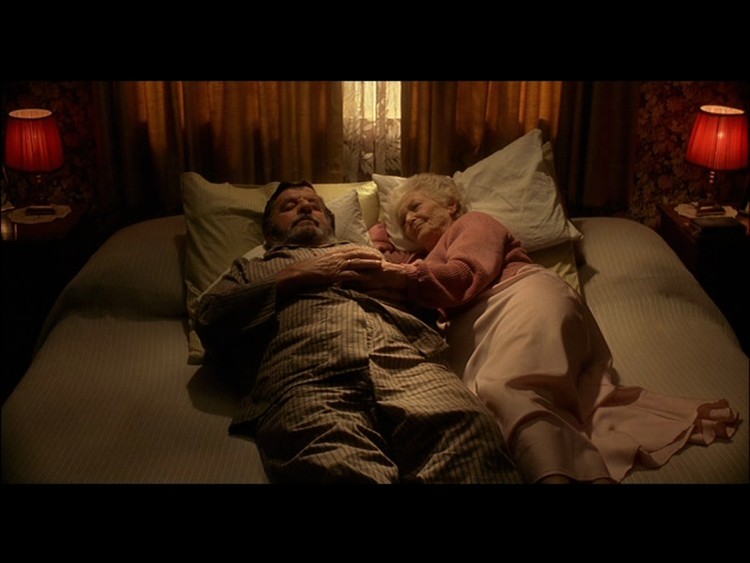
Benjamin Kempf (director) and Jann Preuss (writer)
Erika who suffers from cancer and her healthy husband Ruedi wish to die together by assisted suicide. When the lethal drug is ready, Ruedi is overcome with doubt, and the two argue. Ruedi ultimately drinks the deadly substance as well and lies down in bed with his wife. This short film, the first to explore double suicide in organised assisted suicide in Switzerland, is highly ambivalent.
'At His Own Wake, Celebrating Life and the Gift of Death' by Catherine Porter

Catherine Porter
In this New York Times cover story, Catherine Porter recounts the assisted death of John Shields, an activist, environmentalist, and union leader from Vancouver Island. The article appeared shortly before the one-year anniversary of the legalization of medical assistance in dying in Canada and explores how assisted death impacts the rituals surrounding death.
'Les mots de la fin' by Gaëlle Hardy and Agnès Lejeune
Gaëlle Hardy (director and writer), Agnès Lejeune (director and writer)
Marking almost twenty years since the introduction of euthanasia in Belgium, this documentary provides insights from the office of Dr Damas, a physician responsible for assisted dying in a Belgian public hospital.
'Miele' by Valeria Golino

Valeria Golino (Director), Valia Santella (Writer)
In Valeria Golino’s ‘Miele’, Irene illegally assists in the deaths of terminally ill individuals. Her understanding of her work is challenged, however, when she meets Carlo who wishes to die but is physically healthy. The film is more interested in Irene’s internal conflict than in advancing a position for or against assisted dying, yet it nonetheless explores various opinions and experiences.
'October' by Shoojit Sircar

Shoojit Sircar (Director), Juhi Chaturvedi (Writer)
In ‘October,’ Dan gets attached to his coworker Shiuli while waiting for her to recover from a deep coma. During this wait, Dan and Shiuli’s family have multiple conversations about the possibility of ‘pulling the plug.’ ‘October’ subtly broaches the topic of passive euthanasia, and ultimately affirms conventional beliefs held in India about the sacredness of life.
'How to die in Oregon' by Peter Richardson

Peter Richardson (director)
This documentary follows the stories of a number of individuals in Oregon who have chosen to, or are considering, making use of the state’s death with dignity law. Through these stories, it paints the legalization of assisted suicide in an extremely positive light, demonstrating the gratitude and relief of individuals who can legally access medications which will end their lives.
'O último abraço' by Vitor Hugo Brandalise

Vitor Hugo Brandalise
In 2014, 74-year-old Nelson Golla complied with his wife Neusa’s request to die; Neusa was 72 and being fed through a nasogastric tube at a nursing home. Nelson hugged his wife and placed a homemade bomb between them, which killed Neusa and hurt him. The case is reconstructed by Vitor Hugo Brandalise in this book-length investigation, which fomented a debate about old age and euthanasia in Brazil.
Noticias Caracol interview with Martha Sepúlveda
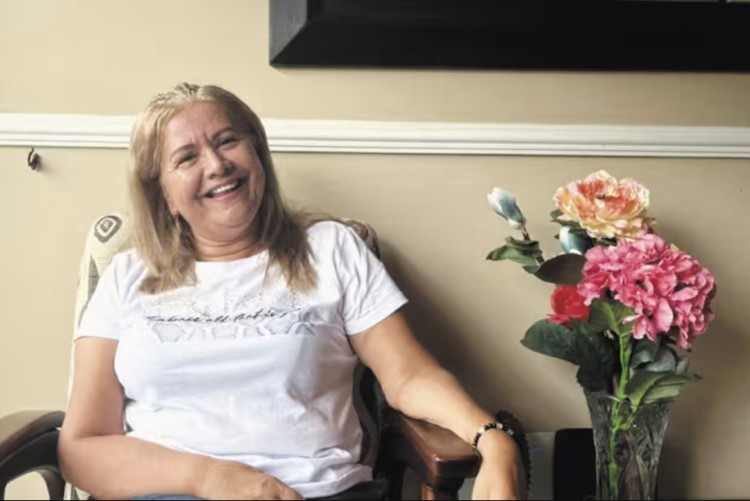
Martha Sepúlveda (interviewee), Juan David Laverde (interviewer)
In October 2021, Noticias Caracol aired an interview with Martha Sepúlveda, who expected to become the first non-terminal patient to have a legal euthanasia in Colombia. The interview went viral; Sepúlveda’s unworried attitude – smiling and seeing no conflict between her decision and her Catholic faith – caused controversy, and her euthanasia was cancelled before being reauthorized for 2022.
'As intermitências da morte' by José Saramago
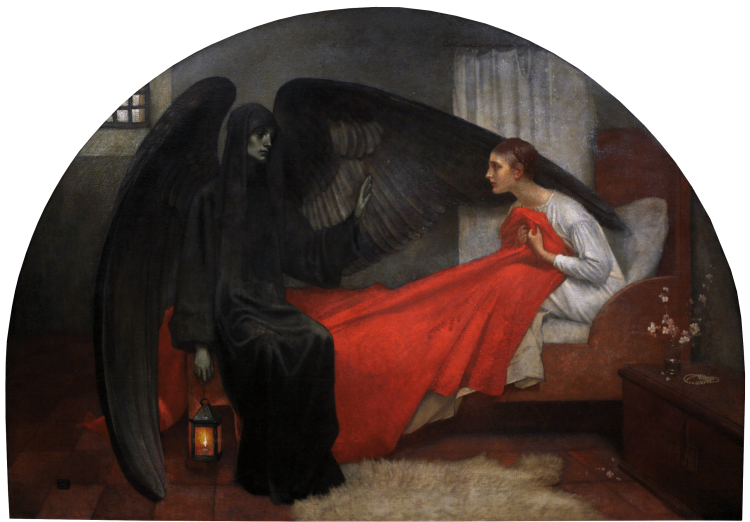
José Saramago
‘As intermitências da morte’ by Portuguese writer José Saramago explores the economic, political, religious, and ethical questions that would be raised if, suddenly, people stopped dying. Distinguishing between ‘to kill’ and ‘to give death’, this allegorical novel was invoked in the debate on the legalization of assisted dying in Portugal and of orthothanasia in Brazil.
Video plea by Valentina Maureira

Valentina Maureira
In 2015, 14-year-old Valentina Maureira self-recorded a video pleading with Chile’s president to authorize her euthanasia, because she was tired of living with cystic fibrosis. The video went viral, drawing a presidential visit, igniting right-to-die debates, and shaping legislative proposals. Yet, the legislative effort stalled, and Chile’s penal code still criminalizes assisted dying.
'Manon' by André St-Pierre et al.

André St-Pierre (director), Benoît Dutrizac (interviews), Manon Brunelle (contributor), et al.
The 2004 TV documentary ‘Manon’ chronicles the journey of Manon Brunelle, a Canadian citizen living with multiple sclerosis, as she sought assisted suicide in Switzerland. Her story served as a powerful catalyst for public and political discourse on end-of-life care in Québec, influencing the legislative discussions that led to Bill 52 and to legal medical aid in dying in Canada.